by Sam Glaser
 A summary of every Jewish holiday:
“They tried to kill us, we won, let’s eat!
-Alan King
“I got a job on Madison Avenue in New York…and they fired me cause I took off too many Jewish holidays!”
-Woody Allen
As soon as the Passover seders have passed, most are happy to NOT celebrate so much for a while. And yet, there are another six days of matzah munching and another dozen holidays in the space of a month and a half. Who needs to work? Several important commemorations dot the calendar during the seven weeks leading up to the anniversary of receiving the Torah, Shavuot. I felt that any description of the Jewish festive cycle must make mention of these milestones that are typically left out of the holiday hall of fame. Therefore, for this chapter I’m cramming in all of the lesser blips on the radar so that you don’t miss out on any of the fun.
The 15/16th of Nissan:
The Passover Seders…it’s matzah time!
The 16th of Nissan:
As soon as the first day of Pesach is over we start a special period called S’firat Ha’omer, where we count the forty-nine days until Shavuot, which occurs on the fiftieth day. Forty-nine is a crucial number in Judaism; since the number seven runs throughout the fabric of reality, logically seven squared is also significant.
In the days of the Temple a certain measurement known as an “omer” of barley was offered on the second day of Pesach. Then we would start the countdown, building up our excitement for the climactic event of human history in the year 2448, the first Shavuot at Mount Sinai. Eventually this period became associated with the various permutations of the seven kabbalistic s’firot (Godly emanations through which God interacts with the world.) This daily roadmap of spiritual growth opportunities allows us to refine our character traits to prepare for the ultimate “kabbalah,” personally receiving the Torah. These days we commemorate this count with a simple blessing and then a counting of our own each night. It’s a tremendous burden to remember to count every single day…if we miss even one, we can no longer make the blessing the rest of the nights! God forbid I miss out on a chance to make a blessing! I’m very grateful for technology to keep me in the mix: I get an email every day to remind me and my iphone siddur concludes the ma’ariv service with a listing of the proper day.
During Rabbi Akiva’s time, the Talmud tells us that 12,000 pairs of his students died during S’firat Ha’omer since they didn’t treat each other with proper respect. Therefore this period became associated with an awareness of the importance of achdut (Jewish unity) and a state of semi-mourning. Celebrations like weddings, bar/bat mitzvah parties, concerts or even niceties like the joy of a shave or haircut are prohibited. The bottom line is that what should have been a time of joyous anticipation is now subdued. I must admit that these  restrictions are somewhat of a bummer, especially for frum musicians. With no parties or events in need of live music, many hunker down in the studio or take extended vacations, wondering how they will pay the rent come June. The one exception to the rule is singing without instruments and thanks to this leniency, grateful a capella groups sell lots of albums this time of year.
The 17th of Nissan:
The intermediate days of Passover begin as soon as the second day (or the first day in Israel) of the holiday has ended. Yes, it’s still officially Pesach! The status of these four intermediate “Chol Hamo’ed” days is one of festive nature but most types of work can be done. Our prayers are of the weekday variety with special holiday insertions, plus the addition of a celebratory Hallel, Torah reading and Mussaf. That means that the whole week one is spending a lot of time in shul! FYI: Chol Hamo’ed also takes place during the week of Sukkot in the fall. Many in the working world attempt to keep their jobs intact by showing up in the office normally, or as normal as one can appear when munching matzah at the lunch break. I think it’s best (and the rabbis agree,) if at all possible to take the time off, to relax and enjoy day trips with friends and family. We love the fact that the amusement parks, hiking spots and beaches are empty, unless of course Passover coincides with Spring Break. There are certain restrictions in place to keep a sense of the sacred…check with your favorite rabbi for details. The Shabbat of Chol Hamoed is a unique collision of holiday joy and Sabbath sanctity. The services are usually particularly sweet and are enhanced with the public reading of the evocative love poetry of Shir Hashirim, the Song of Songs.
21st/22nd of Nissan:
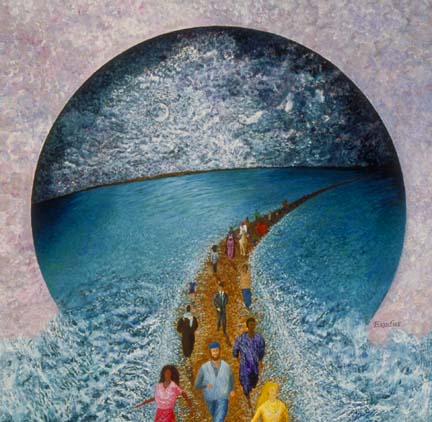
The last two days of the week of Pesach: These days are treated with the same restrictions as any Jewish holiday. There are no special observances other than the pleasure of hearing the Torah portion featuring the splitting of the Red Sea read on the anniversary of our crossing. The eighth day of the holiday is one of a few times per year that we stop to remember those loved ones who have left the earth in a short memorial ceremony called Yizkor. Since I’m typically leading Passover programs around the country, these extra two days after a busy week of concerts for Chol Hamo’ed offer much needed r&r. If you have the opportunity to share the final meal of the eighth day with Chassidim you will be treated to another four cups of wine and plenty of song and spirit during their annual “Mashiach Seudah.” This festive meal echoes the themes of the Haftorah reading of the day, which heralds the imminent arrival of the Messiah.
The 26th of Nissan:
 The first of the many commemorations on the heels of Pesach is Yom HaShoah. This date was chosen by the Israeli government to memorialize the six million since it is close to the anniversary of the Warsaw Ghetto uprising, representing the indomitable Jewish spirit, even though the uprising was doomed. Whereas the Orthodox world maintains that Tisha B’av covers all the maladies throughout history, I think it is appropriate that the Holocaust has it’s own milestone to keep the memory fresh. While it is much more of an event in the Holy Land, Diaspora organizations typically hold memorials featuring survivor testimonials, and it is also the day that over 10,000 participants on the annual March of the Living meet in Auschwitz. I am often asked to perform songs like my Born To Remember or One Hand, One Heart songs at ceremonial gatherings and I appreciate the opportunity to help my fellow Jews connect both to the vast destruction and the miracle of our survival.
The 1st and 2nd of Iyar:
The next special day is actually one that occurs every month. Rosh Chodesh (head of the month) and is the celebration of the new moon/new month. This mitzvah is the very first commandment given to the Jews as a free people in Egypt. In other words, now that we are no longer slaves, not only are we accountable for how we spend our time, but we also have the opportunity to sanctify it. The first month we had the chance to commemorate in Egypt was Nissan, and knowing when Rosh Chodesh occurred gave us the chronological awareness of when to take the lamb for the Passover sacrifice and then which day the seder (and exodus) would occur. Two weeks after the full moon on Nissan ushers in Pesach it’s time for the next Rosh Chodesh, this time for the month of Iyar.
Rosh Chodesh is formally announced during the Torah service on the prior Shabbat. Leading that “Shabbat Mevarchim” service is one of my favorite pieces of chazzanut and is always a happy moment for the community, not only for the optimism with which we greet the new month, but also because in many synagogues in our neighborhood it means that there will be a sumptuous free lunch. One of the beautiful aspects of Rosh Chodesh is that determining the precise day was the job of the Sanhedrin; in other words, it was up to mankind to determine exactly when our sacred holidays take place. The Sabbath comes every week but the holidays are a powerful sign of man’s partnership in the destiny of the universe.
Rosh Chodesh prayer service includes Hallel and a special Mussaf. Hallel is a series of King David’s Psalms that describe our national redemption, God’s love for the Jewish People and how we reciprocate with dutiful partnership and gratitude. Yes, you should buy my Hallel album to get into the feeling and memorize the words! These poetic verses are typically sung with abandon and have served as a beacon of hope in our long exile.
The primary theme of Rosh Chodesh is the
 miracle of the eternal Jewish People, how like the moon we wax and wane over the millennia but keep on shining. Chodesh is also closely related to the word for newness, chadash. The fact that we follow a lunar-based calendar demonstrates that we emphasize the importance of welcoming newness in our lives. New insights, fresh inspiration, renewed hope and of course, new music. Rosh Chodesh is also known as the women’s holiday; according to the Talmud it is a special day of the spirit given to women as a reward for their unwavering faith throughout the ages.
The 3rd of Iyar:
Yom Hazikaron is Israel’s official Memorial Day for the remembrance of those who fell in war or in acts of terrorism. Back in 1951 the Israel government declared that it was best to separate the ecstatic celebration of Independence Day from the mourning and memory, so Yom Hazikaron was moved to the day before. One-minute sirens are sounded at the start of the day at 8pm and then again the following morning at 11am when the official ceremonies begin. This practice of solemnity before jubilation heightens the awareness of the price paid for Jewish independence. For Modern Orthodox in the Diaspora the two are juxtaposed at large scale public gatherings in most cities during the early evening of the third of Iyar. Typically the events consist of an array of sweet but poorly rehearsed school choirs singing memorial dirges that segue into songs of victory. The requisite theme colors are blue and white, local dignitaries utter sound bites of support and then everyone sings a very moving Hatikvah together.
The 4th of Iyar:
Yom Ha’atzmaut, Independence Day is a serious party throughout the Land of Israel. Crowds gather for concerts and dancing and proudly display Israeli flags on their apartments, cars and bodies. BBQ’s abound and an interesting custom of bashing strangers on the head with squeaky plastic hammers has evolved. Since we usually don’t have that day off in the Diaspora the commemorations are typically moved to the Sunday before or after with gala concerts taking place in large outdoor settings. Yom Ha’atzmaut is an amazing time of Jewish unity since love for Israel is one thing upon which all Jews can agree. I love seeing all my holy brothers and sisters from the four corners of the earth rejoicing together and that experience alone is worth braving the traffic and heat at the local events. Most synagogues have special morning services to commemorate the day and include Hallel to acknowledge the miraculous nature of Israel’s founding.
The 14th of Iyar:
Pesach Sheni is perhaps the dimmest blip on the annual holiday radar. Rabbi Shlomo Carlebach called it the “capitol of second chances” since its initiation came as a result of spiritually impure individuals arguing to Moses that they too had a right to a Passover celebration. God established that the month after the official seder would be the designated time when such individuals could bring the offering to the Temple. Nowadays most forget about the holiday until it’s time to utter the penitential Tachanun prayers in the morning service and the rabbi reminds everyone, to their immense relief, that thanks to Pesach Sheni they can be skipped.
The 18th of Iyar:
 Lag B’omer is an acronym of the Hebrew letters lamed and gimel, signifying the 33rd day of the counting of the omer. The day commemorates the yahrzeit of Rabbi Shimon Bar Yochai, the great mystic who popularized the esoteric teachings of Kabbalah in his text, the Zohar. He commanded his disciples to rejoice on this day and therefore parties replete with bonfires, concerts and dancing erupt throughout the world in celebration of his life and the revelation of the hidden secrets of Torah. Also, according to tradition the aforementioned tragedy with Rabbi Akiva’s students ended on this day so most Jews welcome the end of the mourning aspect of the S’firat Ha’omer period.
My brother Yom Tov makes an annual pilgrimage to the site of Rabbi Shimon’s grave in Meron where hundreds of thousands of Chassidim dance in an all night bacchanalian frenzy. Many save the official third birthday first haircut of their boys for this event. Here in the States I am usually leading a citywide jam session sponsored by Chabad, attended mostly by young adults. These outdoor gigs are always rowdy and amusing. One local LA rabbi who hired me to do his event on the beach insisted that I bring my full PA system. I wasn’t excited about the combination of my expensive electronics, drunken revelers and sand, but I acquiesced. Sure enough he had dragged hundreds of feet of extension cords across the bike path so that I could properly crank it up. Of course before the first note sounded the local authorities promptly put an end to this negligent behavior. I then had to scramble to find a local friend with a guitar and endeavored to make hundreds of people happy without the help of amplification.
The 28th of Iyar:
Yom Yerushalayim commemorates the reunification of Jerusalem following the 1967 Six Day War. Many remember this time as the apex of international Jewish pride and unity. For all of us who have spent time in the holy city and feel so connected and at home while wandering it’s golden pathways, we relish in this day to dwell upon her triumphs. Religious Zionists insist that the recitation of Hallel is even more pertinent on this day than Israel Independence Day. While not widely celebrated outside of Israel it is often occasion for public gatherings and concerts, especially on the milestone years.
The 1st of Sivan:
Rosh Chodesh once again! That makes for a total of a dozen “holidays” for your enjoyment between the seders and Shavuot on the 6th/7th of Sivan. Welcome to the Minor Leagues! Whoever said “it is hard to be a Jew” clearly missed the point; being Jewish is a PARTY! I hope to celebrate with all of you together in Jerusalem, speedily in our day.
 The other night over tofu curry my wife was explaining the concept of fiscal vs. calendar years to my kids. Times they are a-changing: my seventeen-year-old Jesse just opened his own E-Trade account so that he can play the market on his own. He used to hunt bugs in the backyard; now he’s studying corporate cash flow! She told him that most individuals in the US seem to follow the January to December calendar model, making January the back to work month following a holiday vacation and a drunken New Years Eve. My dad’s swimwear business went summer to summer since we shipped everything by May and then had to figure out what to do the next season.
 began with overt miracles to God’s working subtly behind the scene. Imagine that you are imprisoned and have a prison guard right outside the cell. Obviously with the watchful guard on the scene you are on your best behavior. When the guard goes on rounds, however, that’s when you can do headstands, scrawl graffiti or go back to digging that escape hole with a spoon. The God of Nissan is an overwhelming presence that limits our freedom of choice, whereas the God of Adar gives us the space to express the fullness of our human gift of choice. I believe that all history is following this same principle and more than ever we live in age where we are stratified into believers and “secular.” That intelligent people can deny God’s presence fills me with mirth. Just look at how powerful God is, like the guard on his rounds, giving us the freedom to perceive God, or not. Amazing!
 This Rosh Chodesh Nissan I had the pleasure of culminating my eight-day tour of Florida with a Shabbaton in Cooper City, just north of Miami. Just before launching into Kabbalat Shabbat services I sang Auld Lang Syne. After all, we just concluded Adar, the final month of year in terms of the biblical count. That makes the transition into Nissan the true New Year’s Eve. As soon as the moon is full, on the eve of the fifteenth night of the first month, we celebrate our annual birthday as a nation. Some 3000 years ago we were a nation enslaved by a decadent tyrant, yearning for freedom. At the stroke of midnight that first Passover, after nine months of plagues, we emerged from the womb of Egypt to our destiny of freedom. The concealment of Adar gives way to open revelation at the Sea of Reeds and Sinai, and thanks to our remarkable custom of making an annual Seder, we still relish in the birth of the unbreakable soul of our nation.
 insists that this body is no more than a meat-jacket that we must maintain with food, water and exercise so that it can continue to shlep the precious, divine soul on it’s mission. Throughout the year we indulge in petty material concerns and accumulations. Come Pesach, along with our physical spring-cleaning we have the opportunity to get down to the soul level in our worldview and interpersonal connections. Kabbalah has given us a window into the soul that is a perfect user manual that engenders pride in ownership. For those empirical types that must see it to believe it, our tradition teaches a “five levels of the soul paradigm” that clarifies the outlines of the ephemeral self. In the interest of having a wide-eyed, openhearted Pesach, allow me to take you through the journey of these five levels, based on the teachings of Rabbi David Aaron and Rabbi Tom Meyer.
 during the Holocaust was meaningless manual labor. Without meaning, our lives become living agony. Also, the nefesh is being expressed when we hear the voice of the conscience speaking, that fundamental, cross-cultural concept of good and evil. We know it’s inherently wrong to punch an elderly stranger in the street. Hollywood movies with heroes and villains sell worldwide because all humans share certain internal ethics. That’s our nefesh speaking. Darwinian evolutionists and physicists can’t quite explain why it’s there. But it is. And we know its voice like we know we have five fingers on our hand.
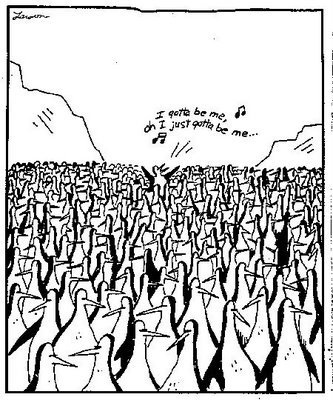 unique, in spite of the fact that we are one among billions of similarly entitled beings. It’s our neshama speaking when we pursue happiness. I’m sure scientists might have convincing theories about why we strive to feel in sync, on a mission, why we feel we are deserving of happiness. But any true pleasure seeker does not need science to explain this universal drive. When we stop to think about it, it’s clear we have a neshama, a divine force informing our every motivation.
 idea of being separate, alone with another. The yichud room at a traditional Jewish wedding is when the bride and groom are secluded in an intimate space just after the ceremony. We’ve all felt yechida: those times when we are deeply connected and empowered and totally blown away. For some of us, it was the birth of our child. For others, a perfect ski run on the back bowls of Vail. Some find it in Yosemite or surfing a glassy, overhead, bowling wave. Ask anyone who feels they were saved from a potential harrowing accident by a miracle. The Seder is a fifteen-step opportunity to spend an entire night in yechida. We say the Sh’ma twice a day to remind ourselves of the possibility, just for that moment, to love God with all our heart, soul and might.
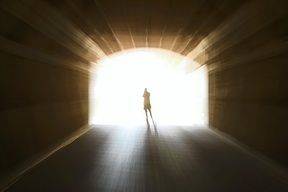 field, Raymond Moody, interviewed thousands of individuals that “flat-lined” for over twenty minutes and then came back to life. Many report a multi-stage chain of events that parallel the description of death in Kabbalah. Commonly experienced phenomena are seeing their body from above, hearing everything that was going on and enduring a rapid review of their lives (much like the great James Brooks movie Defending Your Life.) Some are met by loved ones and are then sent back or feel they must return to their corporeal existence to complete a task. Nearly all see or feel a powerful light that is loving and comforting. Our rabbis tell us that this is the “ziv hashechina,” the light of God, of creation. After all, the sun wasn’t formed until the fourth day…could this be the light that God stated was “good” on the first?
 I’m trying to understand why I’m so perturbed by my kids wasting time glued to a screen. Perhaps it’s because my wife and I brought them into the world with the hope that they might better appreciate the gift of life. Or at least ride their bikes once in a while. As adolescents they see the “real world” as the music, videos and TV shows that they voraciously consume. All the Jewish stuff they have to deal with in day school is a burden to be endured until they can get back online. Plugging in is a divine right. After all, they will live forever, have all of their needs met and perish the thought of having a vacant minute. In this generation you’re nobody until you have the latest screens of all shapes and sizes. Entertainment options from Avatar to Jackass to funny pet videos on YouTube compete for their attention on aptly named iphones, ipads and imacs.
 friends…simultaneously. I can leave for the evening and return to find her in the exact same position. She can handle piano practice for ten minutes but as soon as it’s time to work out a tough passage I can see her desperation to unplug her brain in front of the screen.
 people and remain few in number and yet will impact all of mankind by wandering the globe. I would argue that God’s Light Unto Nations experiment is working rather well; here is one of my favorite quotes:
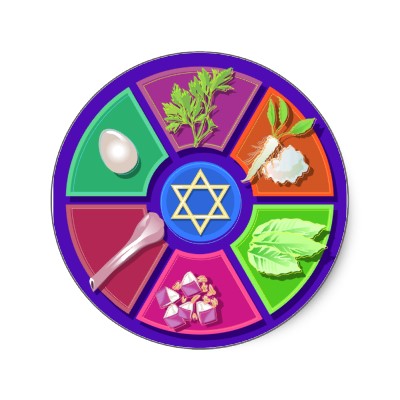 Demonstrate the plagues with marshmallow hail, throw rubber frogs, wear animal masks and die on the floor for pestilence. Just like Shabbat meals, the three ingredients for a great seder are fun, fun and fun. The key line is “b’chol dor vador…” in every generation we must see ourselves in the Exodus. This isn’t a commemoration of something that happened to distant relatives. It’s our story in perpetuity, in every age, with every enemy of our people that seeks the destruction of our holy mission of tikkun olam.
 matzah by even a moment or dipping delicate greens in salt water. We reinforce the concept that we were redeemed and are continuously redeemed from servitude so that we may serve God with love. The crowning moment of the Exodus is the revelation of God’s will in the Torah; this profound gift necessitates that we take the time to grapple with its demands. When all is said and done we have to sing, at the top of our lungs, from the depths of our hearts. And most importantly, we can’t let distractions like World of Warcraft derail us from our critical goal of serving as soldiers in the “war of worldcraft.”
 Many a morning I bask in the sunlight on our front porch surrounded by fragrant jasmine, birds of paradise and bougainvillea. It’s my power spot for the Shachrit prayers. I’m bound up in my tefillin, enveloped in my tallit and connected to the Source of all creation. This sunny spot conceals me just enough from the few passersby on our quiet street but some know to look for me and wave as I shuckle back and forth. Our new neighbors have two adorable kids, the oldest a loquacious, blonde three-year-old with a favorite game. While I daven I can’t help but notice him try, often successfully, to run away from the house and down the street as his nanny panics and bolts after him. Every time he gets a little farther and she freaks out a bit more.
 might. It has to have just enough water to serve as ballast for a good throw but be empty enough that it scares the pants off them when it strikes the wall just behind where their heads were moments before. I scream insults at them in my best Pirate tongue and we run until we’re too sweaty or until someone gets hurt. Many neighborhood friends come over specifically to have me terrorize them with my handy Arrowhead.
 10-25 friends over every Shabbat afternoon and hinting not to subtly that I find my own friends to play with. He looks so damn handsome and has such a winning smile. But that smile is more often reserved for his peers and if I want a conversation I have to bribe him with an occasional fancy meal or force him on an outing. Even then I don’t have his full attention; I’m trying to teach him that it’s not OK to text while in a conversation with a live human. He tries to comply until an “important” message comes through.
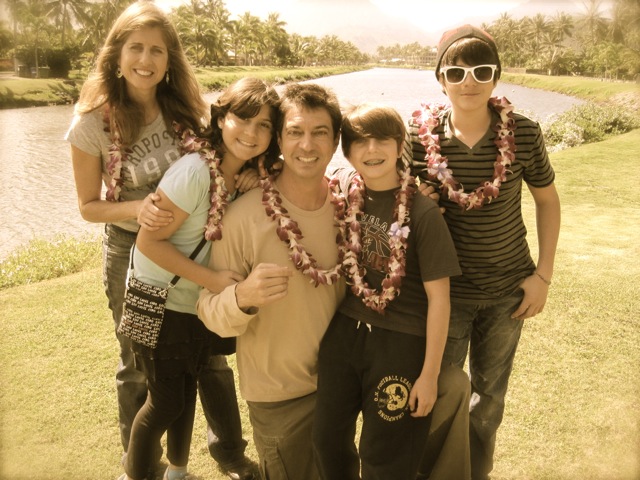 sow in tears will reap with joy.” Treasure your challenges and strive to see God’s loving hand in every facet of your life. Take your spouse out on a regular date night so that when the house empties out you remember what one another looks like. And in the immortal words of the psalmist, James Taylor, “Shower the people you love with love, show them the way that you feel, things are going to work out fine if you only will.”