By Sam Glaser
 My first exposure to tefillin was in a basement workshop of a holy sofer (scribe) in Jerusalem. I was in Israel for my Bar Mitzvah; a lucky Brentwood, CA boy whose parents opted not only for an LA celebration but also for a meaningful few weeks touring the Promised Land. The culmination of the experience was a second Bar Mitzvah service at the Western Wall where I read Torah at the spiritual “ground zero” of our planet and forged an unbreakable bond with Israel and my people. I remember my new tefillin straps feeling sharp and rough; it would be months before the leather would soften and feel comfortable on my skin. After this trip my father made a point of praying with me in his rich, walnut-lined study in the mornings before school, allowing for quality father-son time and ensuring that my tefillin would actually get some use.
Unfortunately I fell into the pattern of most of my Conservative peers and my Bar Mitzvah year would be the last time I’d have any shred of active Jewish life. Yes, I attended confirmation and a few youth group activities but Judaism as I saw it was for nerds and those without a social life. My priorities were fitting in at public school, skiing, biking and surfing and playing with my band. I was proud to be Jewish and enjoyed family Friday Night dinners, but my tefillin were relegated to a dark closet never to see the light of day.
Fast forward to my twenties when I was building my first recording studio and working as a full-time composer. I was chasing TV and movie score work, producing my first albums for clients and trying to get a record deal with my own band. I was approached to write some music to benefit the Operation Exodus campaign (Hineni) and a song for a Camp Ramah Hallel service (Pitchu Li) and suddenly found myself referred to as a Jewish composer. Accelerating this awakening was meeting John and Ruth Rauch whose Center for Jewish Culture and Creativity was offering a two-week arts seminar in Jerusalem, all expenses paid. I knew I wanted to get back to Jerusalem and was excited to get some inspiration to write some more Jewish tunes, so I applied and got accepted to the program.
Imagine the thrill of living in the elegant guest artist hotel Mishkenot She’ananim in Jerusalem where creative types of all sorts performed, collaborated and workshopped late into the nights. I wrote another three songs that would become part of my first Jewish album and bonded tightly with the international group of composers assembled from the four corners of the earth. On one of the final nights of the program one of our mentors made a point of having a one-on-one conversation with me. Phillip said, “Sam, I’ve noticed you are a deeply religious guy.” I laughed, waiting for the punch line. “No, I’m serious,” he insisted. I responded that I couldn’t imagine why he might have come to this conclusion and he replied that he had overheard me in dialog with the Israelis on our program and noted that I always took the religious side of our theological arguments.
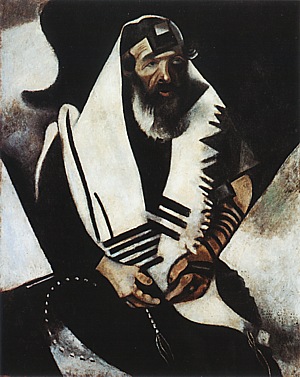 Phillip concluded that I should further investigate this side of my personality and perhaps it would bear some fruit. When I asked how I might do that he suggested that I choose a mitzvah and make it my own. We pondered the alternatives and he then asked if I had ever wrapped tefillin. “Yes,” I replied, “I have a pair that I received for my Bar Mitzvah.” Phillip told me to try putting them on and using this spiritual activity as a way to remember the connection I felt in Israel. Upon returning home weeks went by before I made it over to my parent’s house and found the aged leather in the exact place where it had been left sixteen years earlier. The next morning in my beachside apartment I tried to put them on. I had very little recollection of how to tie the straps or utter the appropriate blessings. I did know enough once I got them on that it was a good time to say the Sh’ma and V’ahavta, to thank God for the blessings in my life and ponder my connection with my heritage.
Midway through my prayers the phone rang. As I reached for the receiver it dawned on me that this was my time to pray and I shouldn’t interrupt the moment with a call. As I uttered the ancient words, however, I did pause to listen to my answering machine as it picked up the message: it was my friend Jymm Adams from the Sports Channel of LA asking me to do all the music for TV broadcast of the Dodger and Angel home games that season. I reached my strapped up hands to the heavens and said, “We’ll try this again tomorrow!”
I never got another lucrative mid-prayer phone call, but this small daily exercise of faith gave me something much more: a palpable relationship with the Creator of heaven and earth. As long as I was setting aside a few minutes each day to pray I started to navigate the challenging waters of the long winded P’zukei D’zimra (Psalms of Praise) and the central prayer, the Shmoneh Esrai. I added paragraph by paragraph onto my personal ritual, not wanting to bog myself down with too long a service but hoping to increase the fluidity of my Hebrew reading. I was suddenly grateful for the hours of Hebrew School, Camp Ramah and practice with my cantor and Bar Mitzvah tutor. Thanks to those with the thankless task of teaching this class clown, I could actually read the Hebrew and with time could flow through the siddur. Before long I could get through the majority of the Shachrit (morning) service and put on my tefillin like a champ. Eventually I learned to focus on the meanings rather than just pronunciations of the words and learned to close my eyes and simply dwell in God’s presence.
At first the whole binding exercise seemed like a masochistic reenactment of the binding of Isaac, attempting to sublimate ego and will to that of the Almighty in a servant/master relationship. Perhaps tefillin are a physical expression of our being “bound” in a covenant with God. Contracts and covenants are good in that they inspire a sense of trust for each party; I was learning to trust God in my daily life, and I was hoping to become someone that God would consider a trustworthy partner in the healing of the world. As I grew in my spiritual intelligence I realized that tefillin commemorate 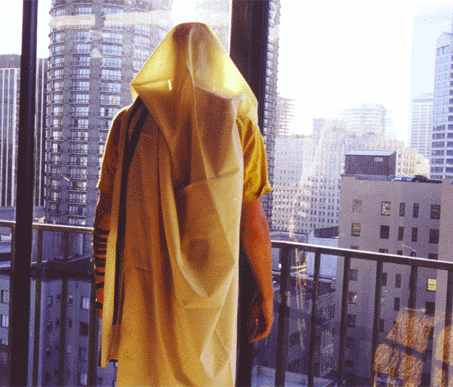 a much greater degree of intimacy that can only be compared to the covenant of marriage: When we wind them around our fingers we utter the betrothal passage of Hoshea that is often recited at marriage ceremonies. For me, tefillin represent a daily “chuppah” moment just like at Mount Sinai, where I get to participate in a loving embrace of my “partner” in creation.
We all know that tefillin are mentioned four times in our Torah, most notably in one of our most important prayers, the Sh’ma. It is these four passages that are carefully transcribed with the same care as a mezuzah or Torah scroll, both in the head and arm boxes. In the Sh’ma our love affair with God is described as one that involves all our heart, soul and might. So too do we wear the tefillin on the arm close to the heart, on the head, the seat of the soul/intellect, and might, the realm of action on our bicep. There is also an idea that the head straps hang unevenly down towards our genitalia. Essentially we are employing a very physical system of checks and balances, a daily uniting of our spiritual and material existence, our yetzer hatov and yetzer harah (good and evil inclinations,) all within the realm of love. Tefillin offer us the chance to walk the middle path, to keep our intellect, emotions and physical being in peaceful coexistence in service to God.
Another virtue of this practice is the idea of unifying the transmission of both the written and oral law. The Chumash (Torah) advises that we place a sign on our arms and between our eyes, but does not tell us exactly where that place is, what that “sign” looks like or even to employ leather and parchment. Yet for millennia Jews have worn the same black boxes in more or less the same way. I remember on that Bar Mitzvah trip how we hiked to top of Masada and learned that the 2000-year-old tefillin that were discovered were indistinguishable from those of today. Clearly Moses was shown diagrams and visions in addition to just taking dictation on Sinai. This oral law gives us the “meat” on the bones of our written transmission of God’s will. By wearing tefillin everyday we deepen the connection of these two worlds of understanding and take our place in the chain of transmission.
I highly recommend Aryeh Kaplan’s book aptly titled “Tefillin” for anyone curious about the role of gender and the deeper mystical aspects of this mitzvah.
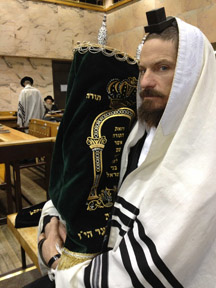 These days I wear my tefillin wherever I wander. I find that I am often in airports or on the rooftops of hotels looking for a quiet corner to strap up and say my morning prayers. I know it appears strange to onlookers but laying tefillin makes a definitive statement: “I’m Jewish, this is what we do, thanks for respecting our differences.” I welcome the questions that often ensue. When I’m not in the synagogue, I have a favorite spot on my east-facing porch where I am greeted with the warm morning light, flitting hummingbirds and the perfume of jasmine. With my own kids I am relaxed with pushing them to get to a minyan on Shabbat, but I consider the wearing of tefillin every weekday inviolate. Their willingness to do this mitzvah is a prerequisite to participating in our family vacations or any activities on Sundays. Thankfully they get it, largely because they see me doing it and they intuit the importance of consistency. Hopefully it’s more than guilt that motivates them…they have their own loving relationship with God…why mess that up? As Woody Allen says, “80% of life is showing up.” I believe that faithful behavior like a daily appointment with one’s tefillin elevates elusive faith into the realm of knowledge.
I’d like to finish with a tefillin story. Everyone that I know that wraps on a daily basis has a good tefillin story, usually about their quest never to miss a day under any circumstances. One day on a concert tour/family vacation on the North Shore of Kauai I did my morning service on the beach overlooking a perfect double overhead swell at Hanalei Bay. After davening I stashed my tefillin in the car and paddled out to have one of the most exciting surf sessions of my life. The locals were helping me get into position to drop into some of the smoothest and deepest bowls of bright green glass of my aquatic career. After a few hours of breathless exertion I returned to my rental car surprised that the interior smelled of cigarette smoke. I then realized that someone else had been in the car. I checked under the seat to find that my phone, camera and tallis/tefillin bag were gone.
I searched the area, interviewed onlookers and filed a report with the police, to no avail. My son Max was Bar Mitzvah age but had left his tefillin in LA and I didn’t know of anyone else in the North Shore that might be observant. What would I pray with on the following day, the last weekday of our trip? I had another problem…how would I reach the guy with whom I was supposed to be jamming that night? After my concert the night before, some locals were inspired to get me together with a percussionist to do a show in a club. But now without my precious iPhone, I didn’t have any of their contact information. It dawned on me that some friends of ours from LA were vacationing on the South Shore. Perhaps we could reach them and arrange to get together and borrow their tefillin.
Sure enough the Brant-Sarif family agreed to meet us for a hike on the North Shore. We met on the edge of a certain condo complex where a steep trail heads down a cliff to a system of ocean-side sea  caves inhabited by giant sea turtles. Following our explorations we scaled the cliff back to the parking lot and went back to their car so that my son and I could daven with tefillin. Time was of the essence since they had to get back down south before Shabbat came in. Just as I strapped up, a warm Hawaiian drizzle started to fall. To avoid getting my friend’s tefillin wet we all dashed into the alcove of one of the condos and shared an animated communal mincha (afternoon) prayer session.
Just as we were davening the owner of this particular condo came walking down the stairs and shouted, “What the…” Upon closer inspection he stated, “my mishpocha!” Sure enough he was a Jewish guy from the mainland that had recently made Hawaii his home. He demurred when we offered him to try on the tefillin but he invited us into his condo for a drink. When I introduced myself as a visiting musician he responded, “You’re Sam Glaser?? We were supposed to jam last night!” Yes, this condo where we were huddled, trying to sneak in our mitzvah of tefillin before Shabbat began, was the very home of the person that I needed to reach the day before.
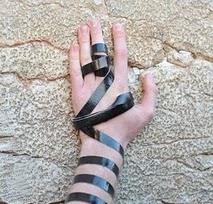 Wearing my tefillin on a daily basis has been nothing other than a window to perceive the daily miracles in my life. Thanks to this discipline I have a regular rendezvous with the Almighty that is fulfilling and unshakeable. Ensuring that I never miss this appointment has created some truly memorable moments. I’m also reminded of the power of an encouraging word: just like my mentor on that Israel program gave me the idea of tefillin as a way to connect my trip to further spiritual growth, so too do I try to offer similar suggestions to those with open hearts whom I encounter. Finally, tefillin offer access to the deepest realms of the soul: a connection of mind, body and heart, a binding of servant to master and a daily reenactment of our sacred marriage with the Creator of the Universe.
 One of the perks of my line of work is time on the road to enjoy new experiences with people and places when I’m not on stage. This year marks my third time leading the High Holiday worship for a wonderful beachside congregation in Virginia Beach. Each year I bring my family and we have used the time between Rosh Hashana and Yom Kippur to explore Washington DC, the Outer Banks and a very special mid-state retreat, Lake Anna. This unique body of water was formed in the early 70’s to cool the North Anna Nuclear Power Plant. Nearly 13,000 acres were flooded, creating hundreds of miles of prime lakefront property in the middle of an old growth forest.
 spent our evenings relaxing with movies, card games and Settlers of Catan. I was also repeatedly rehearsing the Yom Kippur services, much to my family’s chagrin. Each night when everyone went to sleep I ventured down the uneven steps to the waters edge to ponder the stars and pray the evening prayers. On this particular night a sliver of the new Tishrei moon appeared and disappeared amidst the clouds above and the motionless ink-black water at my feet stretched to the horizon. I was surrounded with the rich stereo cacophony of multitudinous crickets filling the air and the occasional splash of a leaping lake trout. I closed my eyes and quietly recited the passages before and after the Sh’ma, then walked to the edge of the dock to recite the central Jewish prayer, the Sh’moneh Esrai. As I whispered the sacred words I searched the outlines of the gently swaying trees and felt them beckoning me upward. Suddenly a warm gust of wind welled up behind me and heard the baritone clang of the tubular bells of the large dockside wind chime. A chill rose from my feet to the top of my head and I felt like I was about to lift off the dock. I was ready to fly, to accept the gift of Heavenly wings.
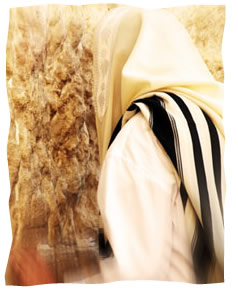 I must say that for the first time, prayer makes perfect sense to me. I’ve been davening daily for over twenty years…I guess it’s about time! The gift of Jewish prayer is a product of the powerful connection initiated by our forefather Avraham, God’s first partner in Tikkun Olam. It is a vehicle for radical transformation with an impact on a global scale. All this time I thought it was just an ancient rabbinic wish list that we endlessly repeat, badgering God into action. Now I understand that prayer is the very instigator of Heavenly action in our material realm. I know viscerally that the transformative power of the human soul is unlimited by space and time. That even though I am surrounded by darkness in the forest of Mineral, VA, I can participate fully in the formation of a peaceful, loving planet, impacting my family, America, Israel, the entire world. Just as God is everywhere, I am everywhere. My pure soul, my “betzelem Elokim” spark of Godliness makes me immortal and omnipresent. At least for those few minutes a day when I choose to connect.
 throughout the year is the underlying reason for our intimidating list of 613 commandments. God urges us to become holy vessels so that we can powerfully assist God in the mission to perfect the world. Living within the boundaries that our beloved Torah prescribes keeps us in the spiritual zone and indicates our commitment to do this crucial work. This experience clarified for me why the Jewish People endures this legacy of celestial responsibility and intense demands on our lifestyle. A good example is kashrut, or why we have to give up certain delicacies like clam chowder and Dodger Dogs. We can see these seemingly archaic rules as a nuisance or instead appreciate that they are necessary since we are spiritual giants that on a sacred mission of Tikkun Olam (healing the world.) After all, it makes sense that the holy words of the siddur are uttered by a mouth that eats kosher food. Our food nourishes each cell in our bodies; certainly we are what we eat and our Creator knows the ideal spiritual formula. Suddenly the effort to prepare and shlep ten days worth of meals to bring in our suitcases for this trip makes a bit more sense.
 The bright red bow on top of the “present” of the month of Tishrei is in the message of Sukkot. Sukkot is all about joy. It’s about a sense of triumph after the work of the ten days of repentance, about the recognition that all we really have is this ephemeral relationship with the Almighty, as signified by our fragile sukkah. That breakthrough that I experienced on the dock at midnight is only possible in a milieu of joy. Our prophets could only prophesy in a joyful mood. We know Avraham was ecstatic about his divine service in the near sacrifice of Yitzchak or he wouldn’t have perceived the angel exhorting him to stay his hand. Joy it the key to the Palace. It is the pipeline connecting us to the heavens. We learn that one moment of the Olam Habah (the world that is coming) exceeds all the joy of this world combined. God exists in a realm of sublime pleasure.
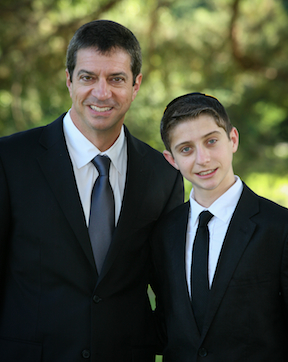 The night before my son Jesse left for summer camp in Wisconsin we were sitting around the dinner table discussing discipline. We turned to our sixteen-year-old counselor-in-training to get his feedback on our parenting style. Jesse commented, “Dad, you have never punished me.” “Really?” I responded. “Yep. Never.” I asked my wife if this is a good thing. She responded, “probably not.” I guess I will be remembered as an “old softy” and clearly Jesse has the healthy quality of omitting certain memories. So how do I enforce discipline? My technique seems to be treating my kids like adults and making consequences real. Indeed, there are ground rules in our mostly peaceful household. If they are broken, our kids immediately sense that the placid order of our micro-universe has been altered. Yes, they can keep pushing or nudging and drive us crazy, but why do that? It doesn’t get them anywhere.
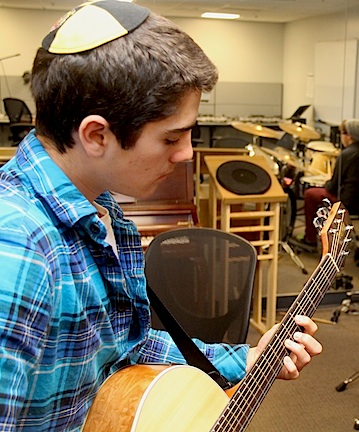 consistently repeating. All three of our children take lessons on their respective musical instruments and must practice regularly if they want to continue. We encourage them to find friends that are trustworthy and do not run hot or cold based on ever-mutating peer popularity contests. We teach follow-through and expect them to meet the obligations they have taken on. I regularly emphasize the teaching that the holy ark was lined with gold leaf on the outside AND on the inside. Why waste precious gold on the inside? The lesson in a nutshell is that being consistent isn’t just an outward attribute; a true tzadik is holy on the inside and the outside. Learning to be consistent as kids makes them better sons and daughters and I believe will make them better employees, employers and most importantly, spouses.
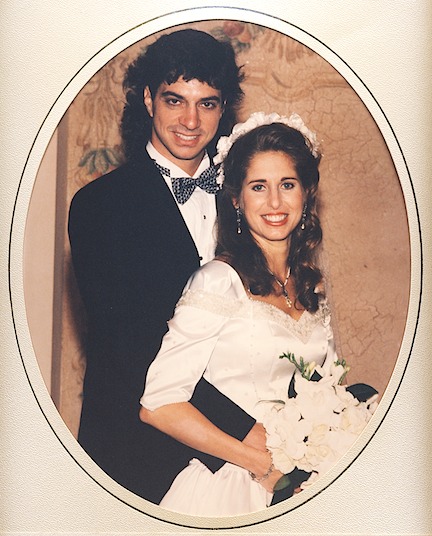 reasonable. In other words, not firing on all cylinders at the starting line if that is a pace we can’t maintain. During that first year of marriagewe minimize outside distractions to find a point of deep connection and passion, thereby allowing one’s spouse to feel secure that the pattern of love and duty established is not going to diminish. The true aphrodisiac in a loving relationship is consistency: honesty and reliability that builds real trust and thereby builds intimacy.
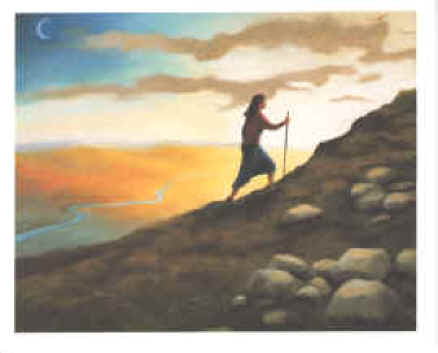 writing and tackle them one by one. Too big a mountain and we’ll never try to climb it. Another method is to bring God into the picture. For example, when I have a creative roadblock I ask God for a new song before I go to sleep. I am rarely let down. Some folks feel funny praying on their own behalf. Establish your small goal and ask for God’s help in achieving it, in the same language you would use asking a friend to do you a favor. Finally, allow yourself a sense of triumph when you accomplish each step and reward yourself for being consistent. For me, chocolate ice cream is a great perk. In fact, I think I’ll use that one right now as a reward for getting this essay written.
 My wife buys the smallest packages of food in order to conserve space in our three-shelf pantry. When I open it on any given morning and find one of those 10oz. boxes of Cheerios I cringe and dream of a time when we can shop at Costco. Furthermore, I insist on having a plethora of cereal options so that I can mix and match my breakfast. She retaliates by buying the mini jars of peanut butter. I get the same grief when it comes to my closet full of clothes. She argues that I have more than she does and calls me a pack rat. I respond that I like lots of choices and see no reason to throw my old favorites away, as long as they still fit. So too with my CD collection, the gear in my music studio, my library. Am I too attached to material things? Yes. But I prefer to give my obsession another name.
 correctness. We live at a time when conscientious Americans are trying to reduce our carbon footprints, bringing canvas bags to the supermarket, driving hybrids and recycling. I’m not suggesting that we abandon these astute practices, God forbid! I am suggesting that we distinguish between minimizing our consumption and maximizing our joy.
 “magnets”; if we prove that we know how to do the right thing in any situation, clearly God can trust us with abundance. God aches to give us more, but we have to CHOOSE the relationship, we have to ASK for what we want and we have to BUILD ourselves into individuals who can handle abundance.
 and should use our Jewish institutions to enhance our connection rather than provide a glass ceiling to our growth. My friend David Suissa comments that in religious life we decide, “that’s not what I do” and then defend that stance religiously! We argue: why try a mitzvah one time if it makes us a “hypocrite” for not sticking with it? As Jews, our access to shefa is closely aligned with the mitzvot that we take on. Take a chance! Be a hypocrite once in a while. Suissa quotes Rabbi Shlomo Schwartz as saying “God counts only the mitzvahs you do, not the ones you don’t.”
 My cherished custom every time I land in Florida is to head straight to the beach and jump in the glassy, warm water. The shock of the Pacific chill is absent…no wetsuit required…and the white sand unfolds to the North for hundreds of miles. Upon arriving on this last trip with my fellow Jewish singer and good buddy Todd Herzog, we dropped our bags at the beachfront hotel and davened a peaceful mincha (afternoon prayer) before jumping into the shallow blue-green playground. As we pondered the pelicans and sandpipers, Todd asked me some penetrating questions about why one would want to say the same exact words three times a day. He was curious what I get out of it. Am I was focusing on just getting the words out or am I actually thinking about meanings? Where do I add my own thoughts? And what happens on Shabbat when we stop making requests from God…what am I praying for then?
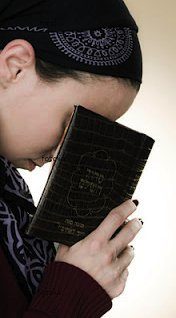 central prayer nearly 2500 years ago…and it was clearly already in use when they did so. Among their ranks were several sages of prophetic stature. They boiled down God’s will for the Jewish People in eighteen (later nineteen) crucial categories. When we repeat this menu of our deepest needs, we enact our partnership with God in bringing them to fruition. So central is this prayer to our existence that it is simply referred to as tefila (THE prayer) when discussed in the Talmud. The Sh’ma and psalms are important, but the Amidah is IT. I think Rashi says it best when he explains that l’hitpalel, or to pray, means to dream or think ultimate thoughts. We utter nineteen dreams for humanity and those dreams become part of us, defining our aspirations and clarifying our service to God.
 there’s any place that you want to deeply focus and use the formulaic words of the millennia, this is it.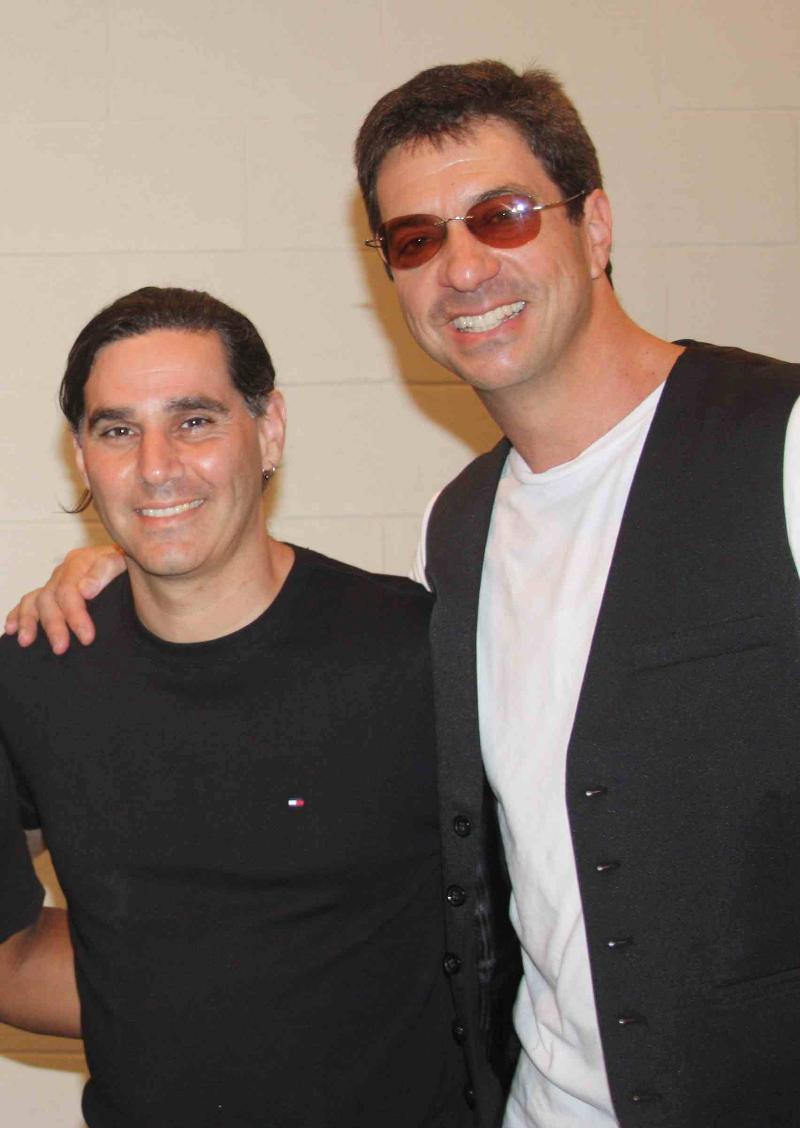
 Allow me to take you on a tour of adults seated in this sweet portrait, from oldest to youngest. My dad, seated on the couch, is looking somewhat haggard thanks to the 15 grandchildren that invaded his peaceful Pacific Palisades home for the week of Sukkot. He was raised in a WWII-era Bronx family that moved in LA while he was a teenager. He went to LA High, rebelled and joined the army instead of going to college and then took over a division of his dad’s garment company. He went from his Orthodox upbringing to eventually join one of the largest Conservative synagogues in LA, Sinai Temple, the congregation in which I grew up. Nowadays he regularly leins the Torah for his local Chabad and actively engages in the passion of his retirement years: studying and teaching Jewish history.
 I’m sharing this gory detail to point out that in spite of our many differences we find common ground and celebrate our love for one another. Yes, there are frustrating moments like dealing with degrees of kashrut on Pesach and accepted sleeve length. Certain cousins hug the opposite sex, others can’t be touched. We have to negotiate how to attend extended family simchas when they fall on Shabbat but we ALWAYS go. The cousins may come from three countries and dress differently but perceive they are one family. Jennifer told me that her kids went into mourning when their Chassidic cousins returned to Israel. We know that together we are strong and we need desperately each other and we have far more in common than those details that divide us. Sound familiar? This is the story of the Jewish people. We are like five fingers on one hand.
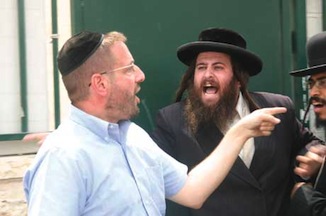
 with the punishment of the perpetrators of this desecration. They cannot continue to abuse the system and avoid the consequences of the ripple effect of their insensitivity. One of the basic seven laws of humanity is to set up a system of courts and uphold justice. Israeli police cannot tiptoe around the offenders for fear of Charedi riots. There must be teeth in the punishment of hate crimes for us to hold up our heads up as a Light unto Nations. As the Midrash says, “Whoever is kind to the cruel will end up being cruel to the kind.” Rabbi Yitzchak Schochet of the UK stated, “We must be intolerant in order to defend tolerance, or unkind in order to defend kindness, or hateful in order to defend what we love. Such ‘acts of terror’ have no place in any democratic society, let alone a Jewish State, whose “ways are kind ways, and all her paths are peace.”
 I am writing this newsletter on the road during my 2011 Chanukah tour. It is as varied an itinerary as can be imagined in the Jewish world; a whirlwind of performing for Reform, Conservative and Orthodox synagogues, religious and day schools and a retirement home. This is my eighteenth Chanukah on the road, a time that is often difficult since I am gone for weeks rather than my typical every-other-weekend schedule, but is also the period when I relish in the joy of having so much time to interact with out-of-town friends old and new and reflect on the year gone by.
 As Thanksgiving rolls around, I’ve been reflecting on just why it is that turkey and Thanksgiving are both called hodu in Hebrew, and what comes to mind is how much we Jews in America have to be grateful for and how our destinies are intertwined. Thanks to the wisdom of fathers of the constitution, Jews were given a sanctuary in the West where they could flourish in freedom. As a people, we are living proof of the power of free markets, access to education and social mobility. My grandpa came to this country as a penniless teenager from a “one-horse town” in Transylvania. In the very next generation his three sons rose to prominence: a graduate from Harvard Law, a garment industry tycoon and an attorney/opera impresario. As remarkable as our family saga is, we are certainly not alone. This past year on my concert tour I enjoyed an eye-opening view of the depth of this symbiotic relationship between the Land of the Free and the People of the Book.
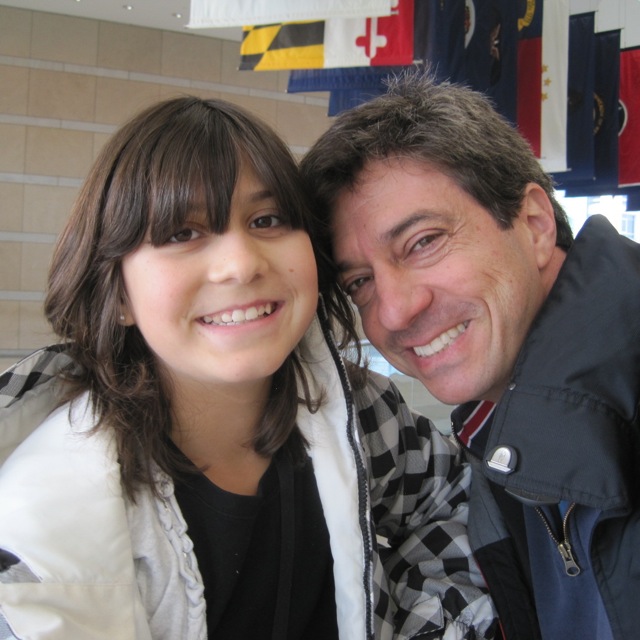 visit Independence Hall and for us kosher consumers, hit the vegan dim sum place downtown. One thing that I didn’t expect was to be embraced by the Jewish angle everywhere we turned. Sure, the Liberty Bell quotes our Torah, “Proclaim liberty throughout all the land…” but the full realization of our contribution was apparent after visiting the two most prominent tourist traps in the center of town. One is the hi-tech Constitution Center where Jewish ideology is credited in guiding the vision of our founding fathers. They were deeply religious men that took their cues from the bible and even considered making Hebrew the national tongue. Some of the tourists, upon seeing my kippah stated: “we love the Jewish people” or “we stand with Israel.” Of course the Jews that stopped us said, “oh, do you know ‘so and so’ from Sherman Oaks?” We saw exhibits that listed prominent Jews in government, building the economy and marching for civil rights. I could see the pride in Sarah’s fifth-grade eyes as she looked for clues of her heritage in this beautifully realized testimony to our grand American democratic experiment.
 Across the street is the spanking new National Museum of American Jewish History. It’s a stunning 100,000 square foot, five story, state-of-the-art nachas factory for members of the tribe. We began the historical journey on the fourth floor in the mid-1600’s and emerged a few hours later in the present day where we pondered Irving Berlin’s piano, Spielberg’s films and Sandy Koufax’s mitt. I think this multimedia exploration of Jewish accomplishment should be mandatory viewing for all Americans; anti-Semitic bias fades in the light of contributions we’ve made or the degree in which Judaism has informed this country’s values. My Reform friends shared our enthusiasm at the intense degree of Jewish pride furnished by the experience. My Orthodox friends shuddered in horror at the $100 million plus bill that otherwise could have financed Philly Jewish day schools for perpetuity.
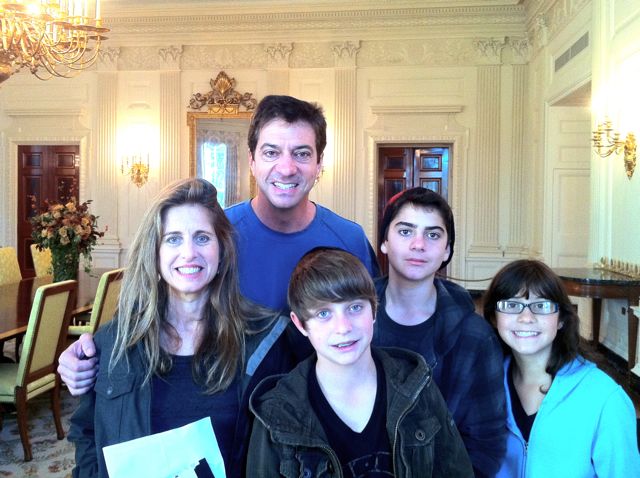
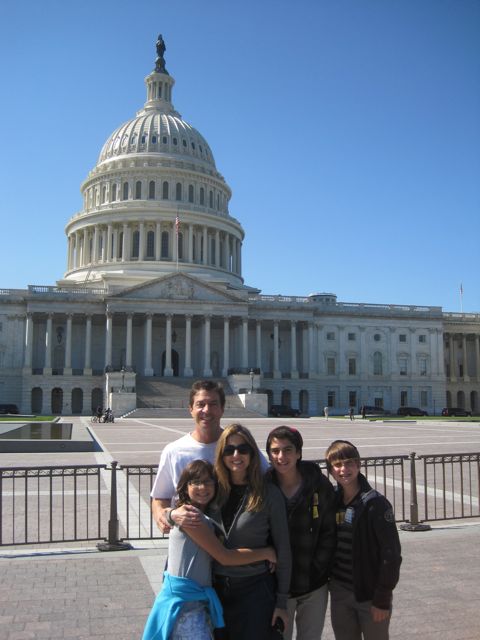 my family on a historic journey to Colonial Williamsburg and then continued north through Richmond up to our friend’s home in Potomac. For kids from LA where “really old stuff” is from the 1960’s, visiting these 1700’s neighborhoods was quite a treat. Well in advance of the trip I worked hard to assemble an overflowing itinerary and booked the various sights with the help of my congressman, Henry Waxman. He was able to secure for us tours of the galleries of Senate and Congress and the Supreme Court, plus a “never tell me the odds” moment: we won the lottery to obtain the rare ticket into the White House where we enjoyed a personal tour from the resident military officers and we met the Obama’s dog, Bo! Following that, my best buddy Chuck’s brother, who is a captain in the Navy, welcomed us for a two-hour insider view of the Pentagon.
 our favorite, the Spy Museum! We went bowling, shopped in trendy Georgetown, visited Chinatown and the historic 6th and I synagogue, hiked to the spectacular Great Falls National Park and somehow did all this in four whirlwind days.
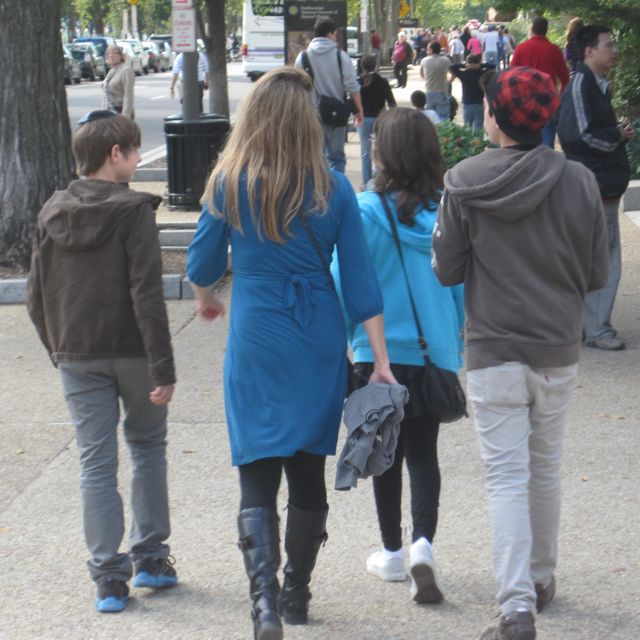 displays describing Jonathan Pollard and Ethel and Julius Rosenberg. A few blocks from the Lincoln Memorial lies perhaps the most important Jewish site of all: Eli’s Restaurant, a glatt kosher eatery where we rested our tired feet and feasted every night before heading back to Potomac on the Metro.
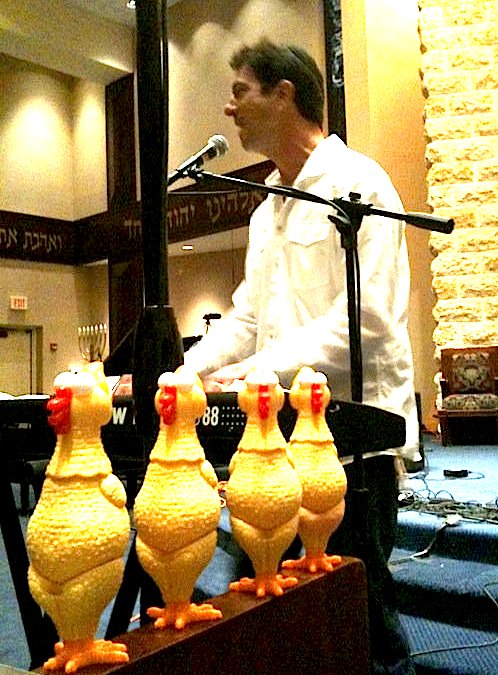
 the rare gift of speaking about spiritual subjects close to my heart to students who were attentive and hungry for the information. I enjoyed the chance to hear both the veterans in Jewish music perform in addition to sampling the hot, upcoming talent. I went to amazing lectures, relished in stories from master storytellers and listened in wonderment to a fifty-voice choir that formed over the course of the conference. And every night, from midnight till 3am, the musician insomniacs gathered in a “kumzitz mafia” jam session of outrageous proportions.
 this twenty-year odyssey as a Jewish composer. These are the community leaders who have rallied to bring me to their congregations, who cherish my CDs, who share my music with everyone they know. Many of them met me when I was single and have followed my life through my engagement, marriage and rollercoaster experience as the father of three. Scarcely a CAJE meal goes by without my having to break out pictures of the family.
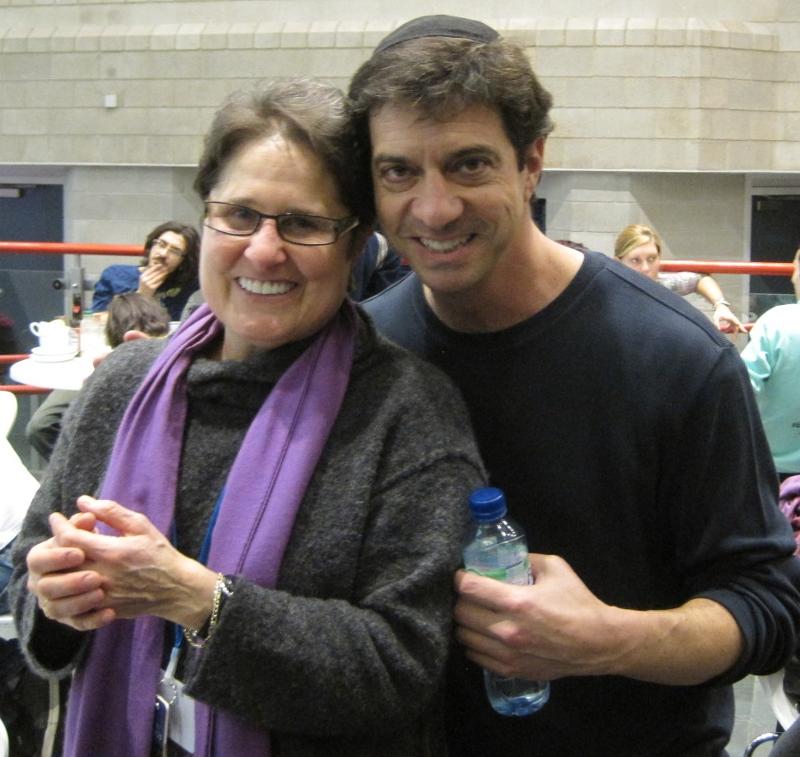 getting invitations to perform out of town. Amazing! This year NewCAJE gave me a taste of new artists Noah Aronson and Max Jared, among others, about whom I will rave and support in their journeys.
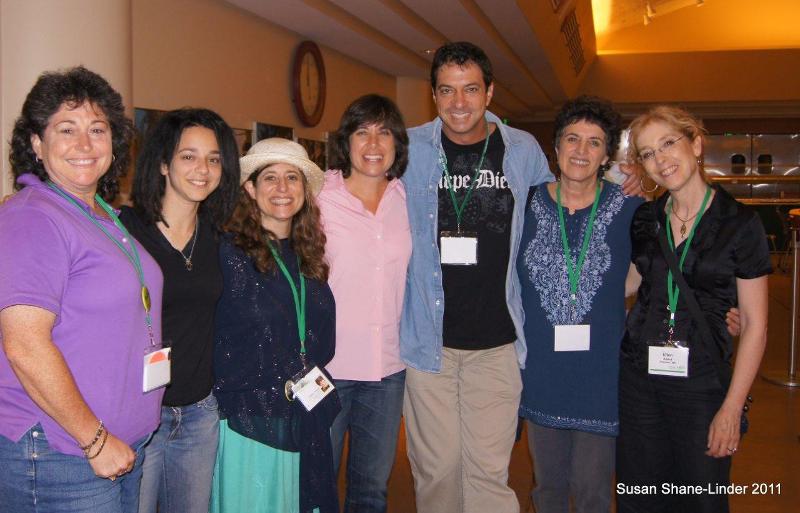 that they return is the camaraderie. There is no price tag one can put on belonging to such an esteemed, generous family. Tragically, teachers are usually on the low end of the socio-economic totem pole. The individuals that we empower to bring the newest generations into the fold can barely afford to live in the neighborhoods of the synagogues they serve. CAJE gives these righteous individuals a chance to stand up and be recognized and appreciated. It’s renewing, refreshing and rewarding. Some chastise the organization and say it’s nothing more than Jewish summer camp. But if summer camp is the “great white hope” for our kids, then why can’t the teachers of our students have their moment in the sun?
 I’m trying to understand why I’m so perturbed by my kids wasting time glued to a screen. Perhaps it’s because my wife and I brought them into the world with the hope that they might better appreciate the gift of life. Or at least ride their bikes once in a while. As adolescents they see the “real world” as the music, videos and TV shows that they voraciously consume. All the Jewish stuff they have to deal with in day school is a burden to be endured until they can get back online. Plugging in is a divine right. After all, they will live forever, have all of their needs met and perish the thought of having a vacant minute. In this generation you’re nobody until you have the latest screens of all shapes and sizes. Entertainment options from Avatar to Jackass to funny pet videos on YouTube compete for their attention on aptly named iphones, ipads and imacs.
 friends…simultaneously. I can leave for the evening and return to find her in the exact same position. She can handle piano practice for ten minutes but as soon as it’s time to work out a tough passage I can see her desperation to unplug her brain in front of the screen.
 people and remain few in number and yet will impact all of mankind by wandering the globe. I would argue that God’s Light Unto Nations experiment is working rather well; here is one of my favorite quotes:
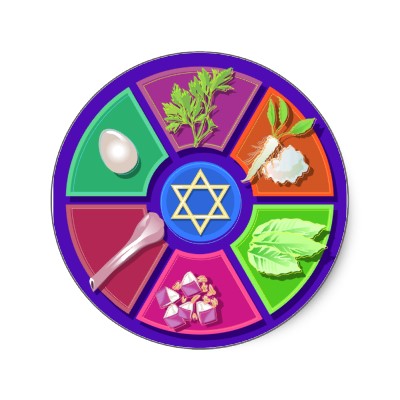 Demonstrate the plagues with marshmallow hail, throw rubber frogs, wear animal masks and die on the floor for pestilence. Just like Shabbat meals, the three ingredients for a great seder are fun, fun and fun. The key line is “b’chol dor vador…” in every generation we must see ourselves in the Exodus. This isn’t a commemoration of something that happened to distant relatives. It’s our story in perpetuity, in every age, with every enemy of our people that seeks the destruction of our holy mission of tikkun olam.
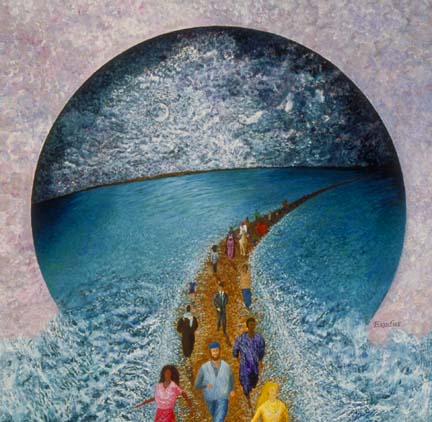 matzah by even a moment or dipping delicate greens in salt water. We reinforce the concept that we were redeemed and are continuously redeemed from servitude so that we may serve God with love. The crowning moment of the Exodus is the revelation of God’s will in the Torah; this profound gift necessitates that we take the time to grapple with its demands. When all is said and done we have to sing, at the top of our lungs, from the depths of our hearts. And most importantly, we can’t let distractions like World of Warcraft derail us from our critical goal of serving as soldiers in the “war of worldcraft.”