by Sam Glaser
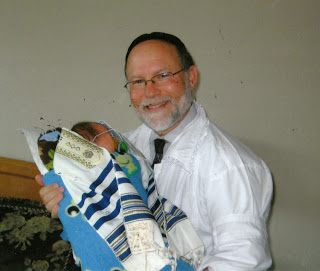 In order for the Jewish People to have a fighting chance at survival we need to connect with nachas. Nachas is the simple feeling of satisfaction when connecting Jewishly. It is a uniquely Jewish sensation and is therefore tough to define for those outside of the tribe. All Jews have had nachas moments. Usually at lifecycle events when we perceive that thanks to this event, all will be well for the Jewish future. Brises, baby-namings, Bar/Bat mitzvahs and Jewish weddings are all nachas moments. Nachas isn’t quite pride, although that’s a big part of it. All parents swell up with pride when a kid has an accomplishment in the world. But a pride moment is an A on an algebra test or passing the Bar Exam. A nachas moment is when that kid can read Hebrew well enough to be called to the Torah. Or when a bride and groom exchange vows under a chuppah. Nachas involves continuity. When the synagogues and federations around the world worry about connecting with the next generation, what they are really saying is that they are concerned about nachas.
My rabbi, Rav Moshe Cohen of Aish LA was giving an overview of the etymology of the word nachas on a recent Shabbas (or nachat on a recent Shabbat!) The root of the word is Nach, like the name Noach (the guy who built the ark.) Other similar words are menucha and nechama. Rest and comfort. Peace of mind. A nachas moment is one where we can be confident that all is well in creation, that God’s well-managed world is working smoothly and that Jewish survival is assured. A deeper meaning comes from the word l’haniach, as in the prayer when we are putting on our arm tefillin. Nachas is about “placing” or putting down firmly the foundation of our Jewish destiny, just like we firmly place our tefillin on our bicep. The word intimates “resting” assured, feeling cool confidence in Jewish long-term spiritual outlook.
Nachas isn’t only for parents and children. Siblings can have nachas for one another. So can dear friends and even strangers. You don’t even need kids of your own: I’m a decades old veteran of Jewish Big Brothers and I have huge nachas seeing the accomplishments of my “little” bro. Unselfish gestures on another’s behalf inspire feelings of nachas for all who hear about it. Established Jewish neighborhoods like Pico, the Five Towns and Boro Park are nachas factories. Their free Jewish ambulance-paramedic service Hatzolah inspires tremendous nachas. They have gemachs (free loan societies) for just about everything: strollers, high chairs, wedding dresses, center pieces, children’s clothing, shoes, shtick, tefillin. Yes, even free loans of cash! Our LA Jewish Federation has a new campaign featuring the faces of those in the community that create nachas. Great Jewish organizations can give one nachas, as can great Jewish leaders who publicly acknowledge their Jewish roots and stay out of trouble. Eli Wiesel: big nachas. Anthony Weiner: not so much.
I remember meeting a wealthy individual on a concierge tour of Israel who seemed to have the best of everything. He had recently been divorced from his non-Jewish wife and was rediscovering his roots. I sensed there was an emptiness that he was trying to fill with this short visit to the Holy Land. My rabbi brother turned to me and said, “He has everything except nachas.” Money can’t buy nachas. It’s a human pleasure on a higher plateau, up there with love, power, divine connection. Nachas takes investment, sacrifice and wisdom. In Jewish life, it’s not “he who dies with the most toys wins.” Go to any Jewish funeral; we don’t do roasts or talk about real estate acquisitions. Those properly eulogizing the dead are talking about nachas moments, the impact he or she had on loved ones, acts of charity and loving-kindness.
My parents used the nachas word frequently. By doing so they ingrained in their four boys that all the success in the world is worthless without it. This is a message that only a few of my friends picked up from their parents. What happened to my generation? Many of them had grandparents who preferred the country club to the kiddush club. It seems that connecting with nachas requires “yichus” or direct connection to one’s Jewishly enlightened ancestry. That’s why Jews get nostalgic when we think of bubbies, Yiddish and chicken soup. Unfortunately, Jewish kitsch cannot replace the influence of a flesh and blood mentor; when we lose the link with those who lived and died for nachas, we lose our awareness of what we stand for and barring radical anti-Semitism, inevitably melt into the greater culture.
I’m grateful that my parents subconsciously taught us that the only access to nachas is an intact family with a Jewish spouse, with kids on a clear-cut path to living a Jewish life. They got the same message from their own parents. My dad only half jokingly would state that we were out of the will if we married out of the faith. And this was in a home without kashrut or Sabbath observance and only a vague sense of the existence of Halacha. In other words, one does not have keep all 613 mitzvot to pass on Jewish values. Assuring nachas does require affiliation, even it’s with the shul you only go to a few times a year. If you want nachas in your life it means you understand that there is no “free lunch.” You’ve got to give to Jewish causes, care about Israel, embrace Jewish culture. If you are lucky enough to have Jewish kids, you can’t teach them nachas by talking about it. They have to witness you in the act of helping to build the Jewish People in some small way. You can’t “phone it in.”
With our own children, my wife and I have emphasized nachas at the expense of luxury and even fiscal responsibility. Nurturing our three kids through Jewish day school K-12 and beyond has been a financially draining and exhausting. Kosher food, Pesach retreats, Bar/Bat Mitzvahs in Israel, guests for Shabbat and holidays…the whole megila! Their father is on a perpetual treadmill where the larder never quite fills up and their mother, who keeps the family books, loses sleep and wears yesterday’s fashions. But the sacrifices
 we make are a small price to pay for the rewards of nurturing Jewishly alive offspring. We’re “paying it forward,” laying the seeds for the future joy of our own kid’s Jewish grandchildren, God willing. Thanks to my prodigious frequent flyer miles we just returned from a two-week family vacation in Israel to visit our oldest son Max who is spending a year learning in yeshiva. He showed up at Ben Gurion airport to pick us up on a Friday afternoon already decked out in his form-fitting Shabbas suit. Clean cut, tanned, in top shape (thanks to the yeshiva gym) and with tzitzit dangling. Can you imagine my slack-jawed, overwhelming rush of nachas?
There were times that I was critical of my brother Yom Tov’s affiliation with the Chassidic veldt in Jerusalem, especially with his patchy facial hair and impractical outfits. I felt he was losing touch with Western culture in his reticence to go to a musical or a movie, or his lack of interest in attending ball games with my father. As much as I tried to convince him of the importance of remaining connected with the world at large, he insisted that his recoiling from “culture” was necessary to regain a sense of purity. I retorted that we have the ability to filter the good stuff from the bad, that you don’t have throw the baby out with the bathwater. He responded by saying that he doesn’t want to have filters, that he hopes for a completely open heart and the ability to hear God’s voice with clarity. I lost these arguments; he moved near the ultra religious neighborhood of Mea Shearim, married a like-minded wife and raised eight beautiful peyos-wearing kids. His oldest daughter recently got engaged at the ripe old age of seventeen. Criticize this lifestyle if you must but I now see that my brother is “laughing all the way to the nachas bank.” His kids will likely live close, marry early, have huge families and give him an exponential number of nachas moments.
So what are the rest of us supposed to do to maximize nachas, to assure Jewish survival? I realize that the gist of all my monthly newsletters is to try to steer my readers into bringing nachas into their lives. Not just for future generations but for here and now satisfaction. Nachas comes one mitzvah at a time. Our sages tell us that the reward for a mitzvah is another mitzvah, in other words, the subtle pleasure from one act multiplies exponentially and launches one on a powerful pathway. Building one’s nachas reservoir requires patience, there’s no rushing this stuff. It’s a quality over quantity thing. We can start now with simple, positive steps. No need to point fingers, no need for panic.
I believe we can take responsibility in our own lives by learning and teaching Torah at any level and serving as an example of a mensch in our communities and in the workforce. The Ba’al Teshuva movement has shown that it’s possible to reclaim nachas even without direct contact to Jewishly aware relatives. Caring, concerned clergy must be out of the ivory tower and boardroom and be out in the field inspiring the performance of mitzvot. Adult education and adult Bar/Bat Mitzvah programs are crucial. Consistent communal Shabbat and holiday celebration is the nursery where nachas can flourish. That’s right, you have to go to the synagogue once in a while, even on sunny days. Lifecycle events should be as overtly Jewish as the participants can handle…these are opportunities to reach beyond one’s comfort zone and get REALLY Jewish. Every step we take to grow Jewishly sends a strong signal to others that increasing nachas is a prerequisite to all our accomplishment and acquisition.
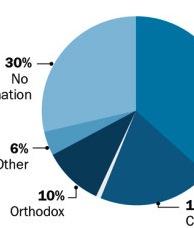
The recent Pew study has awakened Jewish leadership to the need for radical transformation of models of engagement. I think our leaders just need to singularly focus on creating nachas moments. We need to recognize the mensches in the trenches. We need to get beyond our denominational barriers and support one another. I think Jewish parents need a wake up call: Do you really want to be the end of the line of this unique and miraculous people? It’s up to you! Only you can inspire your kids to love their Judaism, to marry Jews. Don’t assume anything…drop lots of hints and if you’re brave enough, have an actual discussion! Your kids DO care what you think.
Let me close by offering a self-serving plug: listen to spiritual Jewish music! In your car, on your ipod, on your couch. There are hundreds of amazing artists out there with songs that will nourish your soul and connect you deeply with your own Jewish journey. Jewish music bolsters feelings of unity with the Jewish People and our Creator. Music can make you sing and dance…it is the antidote to lethargy and hopelessness. In fact, music is often the transport medium of nachas. At my own wedding, one of my friends helped settle my nerves by advising me to sum up all my needs and concerns with one simple prayer under the chuppah: that I be able to give God nachas. May we all have lifecycle events filled with sweet song and abundant nachas. May we all serve God with joy and merit a speedy redemption for our troubled world.
 Business is great. The economy’s steady upturn has slowly trickled down to the bottom feeders of the socioeconomic ladder: non-profit organizations. With a bit more disposable income and the promise of more down the road, members of synagogues have been making good on unpaid dues and supporting special programming like Shabbatons, musicians and speakers. Boards of Directors and clergy have realized that they cannot rave about dynamic synagogue life if they have cut back all their programming. And singer/speakers like me who offer all-ages programs rich in enthusiastic Jewish celebration and deep soul content are suddenly in fashion again.
 widespread acceptance of Jews in the greater culture, most have a sense of Jewish pride. But the net result of that acceptance is that 4/5th’s of these “non-religious” Jews will marry out of the faith and all but eliminate the likelihood of raising the next generation with even basic Jewish values. Who will support Jewish non-profits in the future? Who will our teachers teach? Who will fill the pews of our mega-synagogues? No wonder this study has organized Judaism reeling.
 In short, experienced leadership galvanizes the community by making requests, giving individuals the chance to answer Hineni, here I am. I have a theory that since the time of Abraham, Jews have been primed to wait in quiet desperation until they are called upon and they cannot help but answer in the affirmative. We respond to the call with a sense of honor and duty, glad that we were thought of, wanting to make a difference. Leaders can elicit Hineni responses when coordinating membership drives, planning artist-in-residence programs, banquets, even when recruiting enough folks for a minyan. The only prerequisite to releasing the inherent Jewish drive to take on a task, contribute funds or volunteer is a leader with the ability to pair individuals with a particular job and the guts to make the request. The request must begin with “I need YOU to do ___________ for the community,” in other words, the community member feels uniquely singled out for the job. Synagogues that elicit the Hineni response are typically busy beehives of activity, with all ages constantly coming and going, more like community centers than cold and corporate auditoria.
 me that parents are the “anti-drug,” in other words, that in spite of evidence to the contrary, our kids do care about what we think. I believe we continue to care about what our parents and other role models think until we’re six feet under. We can all look back on our lives and acknowledge the times that a mentor steered us on the right track. We Jews have a spiritual “right track” and it’s worthy of intensive research and aggressive marketing.
 take it up a notch. As I’ve seen at every Hillel function that I’ve had the pleasure to lead, the students will rise to the occasion. They are hungry for Torah and leadership. They need role models that are living a Jewish life and doing so with class and a sense of fun. They want their programming to include not only talks on Jewish history, Israel and the holocaust but on the Jewish soul, text study and personal growth through mitzvot. They know that they are about to enter the abyss of the job market and the ills of society at large and need to be armed with our Jewish secrets for success. Like many Jewish events, food is the primary magnet to attract these “starving students.” But once they are there for the meal we must also feed their hunger for spiritual transformation, for our rich tradition of tools they can use to navigate the waters of life.