by Sam Glaser
 Business is great. The economy’s steady upturn has slowly trickled down to the bottom feeders of the socioeconomic ladder: non-profit organizations. With a bit more disposable income and the promise of more down the road, members of synagogues have been making good on unpaid dues and supporting special programming like Shabbatons, musicians and speakers. Boards of Directors and clergy have realized that they cannot rave about dynamic synagogue life if they have cut back all their programming. And singer/speakers like me who offer all-ages programs rich in enthusiastic Jewish celebration and deep soul content are suddenly in fashion again.
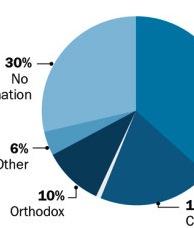
The problem now is that Jewish institutions, which have been gasping for breath for the past five years, perceive that the real issue is greater than mere membership retention. Those proud and few who have remained true to their shul in the lean years are the proverbial “choir” to whom the synagogues and JCC’s are marketing their refreshed calendars. The great challenge revealed in the Pew Research Center’s recent study is that most of our fellow Jews are not even exposed to the message. The real wake up call is that Jews on the fringe are an endangered species and the challenge of our generation is fight complacency and endeavor to bring them back.
According to the study, 1/3 of Jews age 33 and younger, the American Jewish future, are claiming that they are Jewish with no religion. They have a vague sense that they are part of an elite and afflicted ancient cult and have a predisposition to enjoy Seinfeld and deli-food. Thanks to the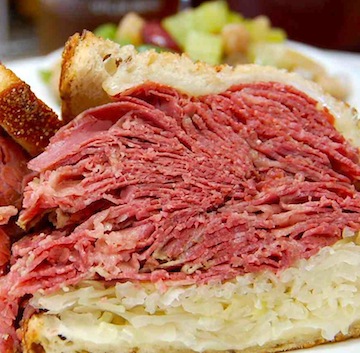 widespread acceptance of Jews in the greater culture, most have a sense of Jewish pride. But the net result of that acceptance is that 4/5th’s of these “non-religious” Jews will marry out of the faith and all but eliminate the likelihood of raising the next generation with even basic Jewish values. Who will support Jewish non-profits in the future? Who will our teachers teach? Who will fill the pews of our mega-synagogues? No wonder this study has organized Judaism reeling.
I’d like to offer a few ideas for turning this ill-fated ship around. I believe I have an unusual perspective gained from twenty years of visiting Jewish communities in fifty cities every year. I interact with, teach and entertain Reform, Conservative and Orthodox audiences, work with preschools through elder-hostel programs, visit schools, shuls, temples, JCC’s and even the occasional church. The formula that seems to work best requires a combination of three factors that I think are ignored at our peril. I’ll sum them up in three simple words: Hineni, Halacha and Hillel.
In my office we can tell well in advance if my weekends are going to be successful. Some organizations hire me, pay a deposit and then we don’t hear from them until they request my travel information a few weeks before the show. The fact is that we help our clients to be self sufficient by making all the marketing materials available online. On the other hand, some venues bother us incessantly about how to “get out the vote.” Some daily. These are often the gigs that are exceptional. These organizations realize that they must strive to gain consensus, to establish committees for the sake of getting more people involved, to get the adults and kids in choirs on stage with me, to have my music playing “on hold” when people call in. They may honor a few dignitaries, include a raffle or Chinese auction and call on local businesses to advertise in the program. They send the congregation links to my videos, they send buses to the senior homes to bring in the elderly, they have the teens run the intermission concession and pass out the aforementioned programs. They have the community vote on which workshop I present during Shabbatons, arrange for multiple individuals to pick me up and feed me, give out honors in advance for opening the ark and being called to the Torah. The cantor might sing a duet with me, a brave teen instrumentalist gets to sit in on a particular song and then soloists and choirs all combine for a blockbuster finale.
 In short, experienced leadership galvanizes the community by making requests, giving individuals the chance to answer Hineni, here I am. I have a theory that since the time of Abraham, Jews have been primed to wait in quiet desperation until they are called upon and they cannot help but answer in the affirmative. We respond to the call with a sense of honor and duty, glad that we were thought of, wanting to make a difference. Leaders can elicit Hineni responses when coordinating membership drives, planning artist-in-residence programs, banquets, even when recruiting enough folks for a minyan. The only prerequisite to releasing the inherent Jewish drive to take on a task, contribute funds or volunteer is a leader with the ability to pair individuals with a particular job and the guts to make the request. The request must begin with “I need YOU to do ___________ for the community,” in other words, the community member feels uniquely singled out for the job. Synagogues that elicit the Hineni response are typically busy beehives of activity, with all ages constantly coming and going, more like community centers than cold and corporate auditoria.
I recently co-officiated with a rabbi who had just taken his first full-time rabbinic position and was already beloved by his chosen congregation. He was a capable speaker, practiced what he preached in terms of living a Jewish life and also had a fine voice for leading the prayers. He had connected with the community in pastoral moments where he displayed his God-given gifts of compassion and insight. I didn’t want to ruffle any feathers, but I felt compelled to give him this Hineni theory before I departed. His community is aging and is endemic of the “running for the exits” tendency of the younger set. I believe that all those great sermons and moments of tenderness will be ineffective in stemming this tide unless he finds the inner resolve to get under people’s skin with chutzpah. I encouraged him to invent programming to empower the full range of congregants, to chase after ex-members, young familes and the unaffiliated with communal, even secular activities and not to spend an extra minute in his office when he can be meeting his constituents “where they live.” In short, to get past the fear of rejection and elicit Hineni from everyone he meets.
Another crucial component to our survival in my humble opinion can be summed up with the word Halacha, or the path. Just like planets have their orbit around the sun, so too do humans and more specifically, Jews. Our path is informed by the vast system of mitzvot that we have held sacred for millennia. No need to reinvent the wheel here. Part of the “Hineni” job of Jewish leadership is to reinforce that we all have an internal compass that is nurtured by the 613 commandments and clarify that they are not the 613 suggestions. Mitzvot are the skeleton that supports the body of Judaism. There is no continuity or survival without them. When an interviewer asks me where I’ve seen evidence of flourishing communities, I point out those synagogues where the leadership has laser-like focus on making mitzvot a priority, regardless of denomination. One case in point is Temple Emanuel in Greensboro, NC, a Reform congregation where I experienced a united, dedicated community like no other. I asked Rabbi Fred Guttman if he would reveal his secret. He replied, “it’s simple: I just get the congregation to take on mitzvot and build from there.”
Incorporating halacha into a leadership style is controversial. It requires that the leaders personally engage in halacha, to “walk the talk.” It requires that the education budget be allotted not only to the children but also on increasing the chance for true “informed” choice for the adults. It requires gentle, private tochacha, or rebuke, when any given individual is straying from the path. It requires nudging our young people to try on kashrut, to make Shabbat and holidays sacred, to marry within the tribe and be fruitful and multiply. I see posters around my neighborhood reminding  me that parents are the “anti-drug,” in other words, that in spite of evidence to the contrary, our kids do care about what we think. I believe we continue to care about what our parents and other role models think until we’re six feet under. We can all look back on our lives and acknowledge the times that a mentor steered us on the right track. We Jews have a spiritual “right track” and it’s worthy of intensive research and aggressive marketing.
My last item, at least for this essay, is Hillel. And by that I mean the amazing collegiate institution that is the pride of Jewish America, and by extension, all Jewish programming for our endangered tribespeople under thirty. Hillels enhance Jewish life on campus for those lucky enough to have had a Jewish day school education and are the last chance for engagement for those that haven’t. I just returned from leading a Shabbaton at Lafayette College, a top 50 liberal arts school in the rolling hills of Easton, PA. A passionate, self-selected group of Jewish students celebrated Shabbat with me, a 27-hour period which included spirited davening, divrei Torah, great meals, my workshop “Jewish Perspective of the Afterlife” and after Havdalah, a rowdy concert where many of them got into the act. Perhaps the Hillel board chose the afterlife course since Halloween is coming up? According to the Hillel website, 94% say that being Jewish will “continue to be important” to them after graduation. Is there any question where our benefactors should be directing funds?
That said, I think what we are seeing is that “continue to be important” is not enough to give these young people the gift of Jewish grandchildren. Nor is the powerful Birthright program or the multitudes of great Jewish summer camps that dot our countryside. The programs with the efficacy that we require must open the door to a life of Jewish commitment, in other words, a life of mitzvot. Hillel Shabbatons, Camp Ramah and NFTY will succeed only to the degree that Jewish leadership pursues the aforementioned individual “Hineni” connections. And when these young people are called upon, the framework on which they base their Judaism must include not only adventure travel and falafel but also an opportunity to learn of the Jewish derech, or path. Yes, we have to “nudge” them. Or else I fear they will be lost in space, spineless, grasping for meaning in their lives that they will satisfy in arenas outside the Jewish weltanschauung.
Some argue that students that come to Hillel events are from different backgrounds and therefore must be catered to with kid gloves so as to not offend or demean those with less Jewish education or tradition. I must admit that I was saddened when the dear students with whom I was interacting over the weekend were stumped when I asked what Lech L’cha meant or what was Abraham’s noted character trait. They didn’t realize that Jews believed in reincarnation and had no idea of the meaning of Kaddish. I’d like to make a plea that our national Hillel rabbis and interns  take it up a notch. As I’ve seen at every Hillel function that I’ve had the pleasure to lead, the students will rise to the occasion. They are hungry for Torah and leadership. They need role models that are living a Jewish life and doing so with class and a sense of fun. They want their programming to include not only talks on Jewish history, Israel and the holocaust but on the Jewish soul, text study and personal growth through mitzvot. They know that they are about to enter the abyss of the job market and the ills of society at large and need to be armed with our Jewish secrets for success. Like many Jewish events, food is the primary magnet to attract these “starving students.” But once they are there for the meal we must also feed their hunger for spiritual transformation, for our rich tradition of tools they can use to navigate the waters of life.
I agree that it’s pointless to cry about the Pew study without coming up with concrete action items. I will be working with my wife to raise a pool of matching funds for Hillel programming over 2014-15. We will be partnering with the non-profit Center for Jewish Culture and Creativity to enable Hillels to book programming that informs as well as entertains. Several campuses in each region will be involved in any given weekend with Thursday Night Live concerts, Shabbatons and Sunday workshops and teacher/staff/board training. Students can opt in to any or all of the events on the schedule with transportation provided. In tandem with this effort will be a subsidized distribution of Jewish music downloads from top Jewish artists, with a featured album available every month for free to university students. It is my hope that this small effort will help to create a groundswell of renewed enthusiasm for Jewish life and serve to better inform the choices of young Jewish people during their college experience and after they graduate.
The solutions above are a-denominational. Some may argue that Orthodox Jews are immune to the above issues. I can state from experience that they too are badly in need of an injection of renewal and joy and lose sleep over their kids’ connection to Yiddishkeit. Others might argue that mitzvot are outside the purview of Reform Jews or are “optional.” No! In fact “The (1999) Pittsburgh Principles asserts that each Reform Jew has the right, indeed the obligation, to enter into dialogue with the mitzvot…affirming a mitzvah, declaring one is not ready yet to accept it, or even rejecting it. But the dialogue must precede the decision, or it is not really a decision.” Conservative Judaism wins the prize in the Pew reports of Jewish organizational hemorrhage. I’m hopeful that the new breed of JTS/AJU graduates are eschewing the ivory tower-academic rabbinic model with which I grew up and instead can incorporate the wide-eyed sense of amazement and intoxication with God’s love that religious life requires. Many Conservative rabbis model halachic life but are unwilling to offer halachic education or tochacha to increasingly secular congregants for fear of appearing pushy or damaging relationships with the board. Clearly the clergy of all denominations must restructure their time; they can’t be too busy in board meetings, fundraising and preparing sermons or they will miss out on crucial Hineni moments. If the Pew study revealed anything it’s that all our movements are in need of healing and that any one’s success is a victory for the Jewish People. More than ever, we’re all in this together.
My friends, all denominations are struggling with retention. All of our organizations are striving to improve the Jewish experience that they offer. All are concerned about maximizing nachas: that profound Jewish joy button that is only pushed when our deepest soul clearly perceives that the Jewish mission is alive and well. When our leadership has the guts and the wisdom to create Hineni moments in our lives, we will rise up and say, “Here I am!” When we are encouraged to focus daily on the Jewish “path” and nurture every age group with Jewish literacy, Torah study and the importance of halacha, our out of kilter orbit will eventually stabilize. And with the devotion of resources to inspiring and directing our youth, we will create an atmosphere of love for heritage that will make the decision to raise a Jewish family a no-brainer. Let us spend our hard earned resources not on further Pew exposés of our demise but on the programs that have proven to have efficacy in stemming the tide of assimilation. I’m confident that with resolve and sagacity we’ll once again see Jews in the Pews.
 One of the perks of my line of work is time on the road to enjoy new experiences with people and places when I’m not on stage. This year marks my third time leading the High Holiday worship for a wonderful beachside congregation in Virginia Beach. Each year I bring my family and we have used the time between Rosh Hashana and Yom Kippur to explore Washington DC, the Outer Banks and a very special mid-state retreat, Lake Anna. This unique body of water was formed in the early 70’s to cool the North Anna Nuclear Power Plant. Nearly 13,000 acres were flooded, creating hundreds of miles of prime lakefront property in the middle of an old growth forest.
 spent our evenings relaxing with movies, card games and Settlers of Catan. I was also repeatedly rehearsing the Yom Kippur services, much to my family’s chagrin. Each night when everyone went to sleep I ventured down the uneven steps to the waters edge to ponder the stars and pray the evening prayers. On this particular night a sliver of the new Tishrei moon appeared and disappeared amidst the clouds above and the motionless ink-black water at my feet stretched to the horizon. I was surrounded with the rich stereo cacophony of multitudinous crickets filling the air and the occasional splash of a leaping lake trout. I closed my eyes and quietly recited the passages before and after the Sh’ma, then walked to the edge of the dock to recite the central Jewish prayer, the Sh’moneh Esrai. As I whispered the sacred words I searched the outlines of the gently swaying trees and felt them beckoning me upward. Suddenly a warm gust of wind welled up behind me and heard the baritone clang of the tubular bells of the large dockside wind chime. A chill rose from my feet to the top of my head and I felt like I was about to lift off the dock. I was ready to fly, to accept the gift of Heavenly wings.
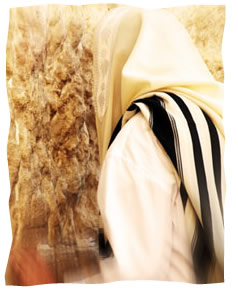 I must say that for the first time, prayer makes perfect sense to me. I’ve been davening daily for over twenty years…I guess it’s about time! The gift of Jewish prayer is a product of the powerful connection initiated by our forefather Avraham, God’s first partner in Tikkun Olam. It is a vehicle for radical transformation with an impact on a global scale. All this time I thought it was just an ancient rabbinic wish list that we endlessly repeat, badgering God into action. Now I understand that prayer is the very instigator of Heavenly action in our material realm. I know viscerally that the transformative power of the human soul is unlimited by space and time. That even though I am surrounded by darkness in the forest of Mineral, VA, I can participate fully in the formation of a peaceful, loving planet, impacting my family, America, Israel, the entire world. Just as God is everywhere, I am everywhere. My pure soul, my “betzelem Elokim” spark of Godliness makes me immortal and omnipresent. At least for those few minutes a day when I choose to connect.
 throughout the year is the underlying reason for our intimidating list of 613 commandments. God urges us to become holy vessels so that we can powerfully assist God in the mission to perfect the world. Living within the boundaries that our beloved Torah prescribes keeps us in the spiritual zone and indicates our commitment to do this crucial work. This experience clarified for me why the Jewish People endures this legacy of celestial responsibility and intense demands on our lifestyle. A good example is kashrut, or why we have to give up certain delicacies like clam chowder and Dodger Dogs. We can see these seemingly archaic rules as a nuisance or instead appreciate that they are necessary since we are spiritual giants that on a sacred mission of Tikkun Olam (healing the world.) After all, it makes sense that the holy words of the siddur are uttered by a mouth that eats kosher food. Our food nourishes each cell in our bodies; certainly we are what we eat and our Creator knows the ideal spiritual formula. Suddenly the effort to prepare and shlep ten days worth of meals to bring in our suitcases for this trip makes a bit more sense.
 The bright red bow on top of the “present” of the month of Tishrei is in the message of Sukkot. Sukkot is all about joy. It’s about a sense of triumph after the work of the ten days of repentance, about the recognition that all we really have is this ephemeral relationship with the Almighty, as signified by our fragile sukkah. That breakthrough that I experienced on the dock at midnight is only possible in a milieu of joy. Our prophets could only prophesy in a joyful mood. We know Avraham was ecstatic about his divine service in the near sacrifice of Yitzchak or he wouldn’t have perceived the angel exhorting him to stay his hand. Joy it the key to the Palace. It is the pipeline connecting us to the heavens. We learn that one moment of the Olam Habah (the world that is coming) exceeds all the joy of this world combined. God exists in a realm of sublime pleasure.
 I am both a music lover and music maker. I’ve learned that the two are mutually exclusive; I have composer friends that minimize exposure to anyone else’s music in order to avoid being unduly influenced. I, on the other hand, regularly thank God for the gift of listening to music…any kind of music! Particularly when driving in LA traffic jams. I’m a fan of many local, US and international bands and I try to be a good groupie and sit in the front row whenever I can sneak out to their shows. I’m a regular at the LA Phil and LA Opera. I’m obsessed with jazz. I have over 3000 CDs of all genres in my collection and I still have my ear out for new sounds. My wife and I share in the Top 40 fun with our three kids and keep abreast of The Voice, Idol and America’s Got Talent. We admit to being both Beliebers and Gleeks. I used to brag that I like every style of music except Country. Well, thanks to dedicated honky-tonk friends I have been converted to the best of southern pedal steel, hillbilly, bluegrass, gospel and even yodeling.
 apply. The festival includes side show distractions like yoga on the hour, a kids play area, continuous Frisbee and hula hoops, (go Wham-o!) impromptu jam sessions and a delicious public swimming pool. Incredible alpine hikes are just down the road. And did I mention fifty of the hottest touring acts in the world?
 housed the most raucous bands. This tennis court sized space is surrounded by a grassy field on one side and on the other, the tents of a dozen lucky campers that must have run FAST to secure these prime locations. Their “chill” areas are shaded with canopies and tapestries and they abut the concert space so all they have to do is hang out on their lounge chairs.
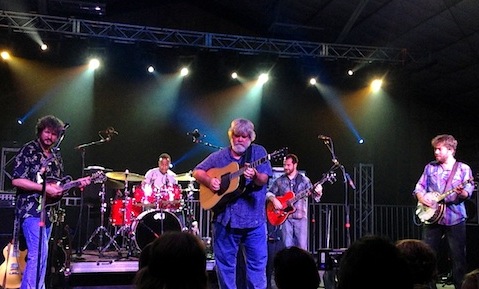 night. But where would I nap? Now I understood why I saw countless people throughout the fairgrounds passed out on the grass, in hammocks, and some, face down in the dust on the edges of the concert venues. Remarkably, no one bothered these people, save for the occasional Samaritan trying to carry them to safety. I realized that one of the crucial elements of this utopian festival is the fact that in spite of arduous conditions, everyone is smiling, peaceful and looking out for one another.
 Houndmouth is a youthful quartet of “easy on the eye” musicians that were having a tough time winning over the ambivalent crowd. Something switched on during their set. I think the initial bias against these seeming pretty boy (and girl) posers disappeared in the light of their excellent material, great vocals and competent musicianship. I have never seen a band overcome indifference to this degree; by the last several songs the audience was SCREAMING for more.
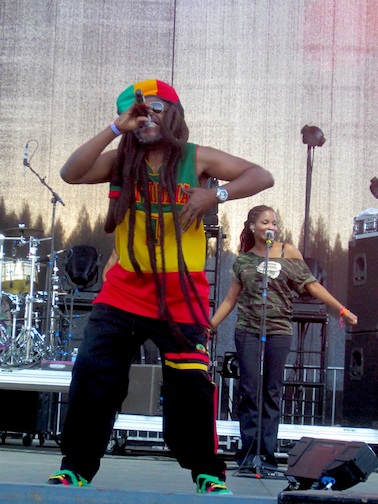
 out backstage passes to the Vaudeville tent, allowing the whole Shabbat Tent staff to enjoy the festivities during Lee Field and the Expressions electrifying old-school set. Before I left however, a family that missed Havdalah insisted that I walk with them back to their RV to include the rest of their group. Some high school musicians were leading a full bore jam session in front of their RV next door and it seemed impossible to lead a service amidst the din. I tried another tactic: during a blues number I simply chanted the Havdalah prayer in the form of a blues tune and grooved everyone along to a shavua tov.
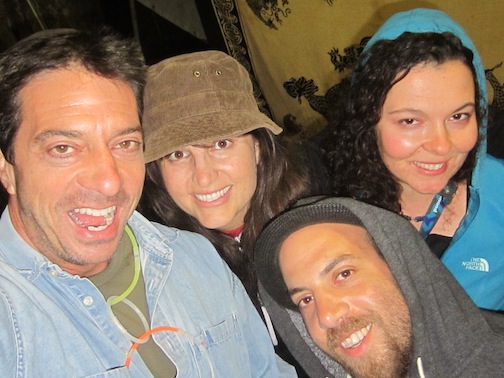 focused efforts in the Shabbat Tent to serve as a light onto nations, spreading a compassionate Jewish presence in this alpine love fest. Just like the connections I make when I lead a Shabbaton weekend and really can “get” everyone that I meet, I feel similarly present in this milieu.
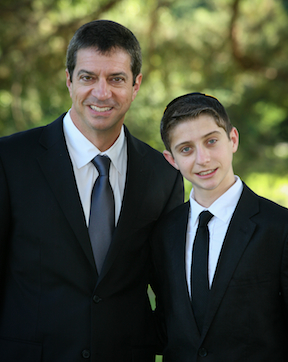 The night before my son Jesse left for summer camp in Wisconsin we were sitting around the dinner table discussing discipline. We turned to our sixteen-year-old counselor-in-training to get his feedback on our parenting style. Jesse commented, “Dad, you have never punished me.” “Really?” I responded. “Yep. Never.” I asked my wife if this is a good thing. She responded, “probably not.” I guess I will be remembered as an “old softy” and clearly Jesse has the healthy quality of omitting certain memories. So how do I enforce discipline? My technique seems to be treating my kids like adults and making consequences real. Indeed, there are ground rules in our mostly peaceful household. If they are broken, our kids immediately sense that the placid order of our micro-universe has been altered. Yes, they can keep pushing or nudging and drive us crazy, but why do that? It doesn’t get them anywhere.
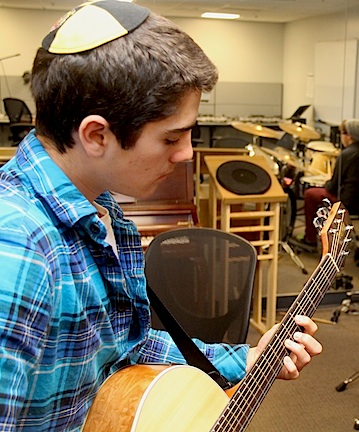 consistently repeating. All three of our children take lessons on their respective musical instruments and must practice regularly if they want to continue. We encourage them to find friends that are trustworthy and do not run hot or cold based on ever-mutating peer popularity contests. We teach follow-through and expect them to meet the obligations they have taken on. I regularly emphasize the teaching that the holy ark was lined with gold leaf on the outside AND on the inside. Why waste precious gold on the inside? The lesson in a nutshell is that being consistent isn’t just an outward attribute; a true tzadik is holy on the inside and the outside. Learning to be consistent as kids makes them better sons and daughters and I believe will make them better employees, employers and most importantly, spouses.
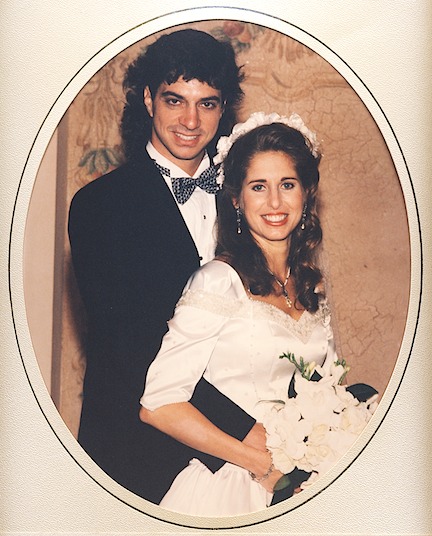 reasonable. In other words, not firing on all cylinders at the starting line if that is a pace we can’t maintain. During that first year of marriagewe minimize outside distractions to find a point of deep connection and passion, thereby allowing one’s spouse to feel secure that the pattern of love and duty established is not going to diminish. The true aphrodisiac in a loving relationship is consistency: honesty and reliability that builds real trust and thereby builds intimacy.
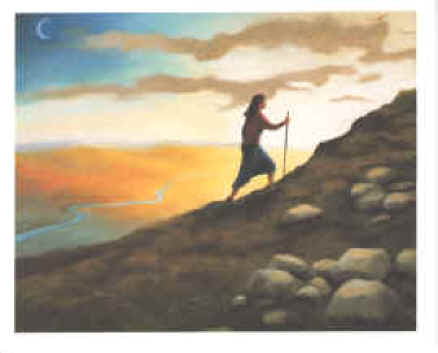 writing and tackle them one by one. Too big a mountain and we’ll never try to climb it. Another method is to bring God into the picture. For example, when I have a creative roadblock I ask God for a new song before I go to sleep. I am rarely let down. Some folks feel funny praying on their own behalf. Establish your small goal and ask for God’s help in achieving it, in the same language you would use asking a friend to do you a favor. Finally, allow yourself a sense of triumph when you accomplish each step and reward yourself for being consistent. For me, chocolate ice cream is a great perk. In fact, I think I’ll use that one right now as a reward for getting this essay written.
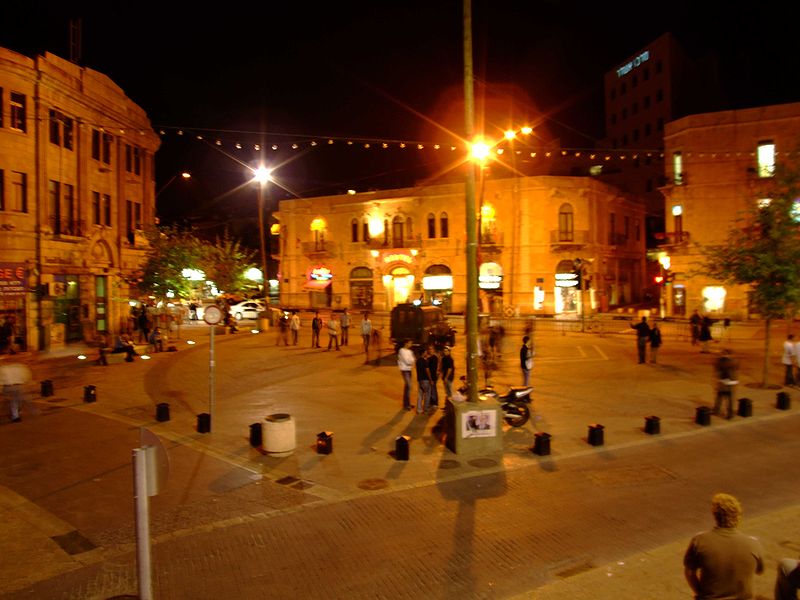 As a teenager I remember the call as I walked down Kikar Tziyon (Zion Square) in Jerusalem. The call of “Mincha, Mincha,” rang out from the entrance of a small storefront shul. I would do my best to avoid the squat elderly man with a thick Sephardic accent that beckoned in the doorway. God forbid I have my afternoon fun interrupted with 10 minutes of boredom as I stood there pretending to pray. As a young traveler I did not have any tradition of the afternoon prayer ritual. At that point in my life I was aware of Shachrit, the morning service which I avoided since I saw it as far too long and inconvenient. I was familiar with Ma’ariv, the evening service from Friday nights at Camp Ramah. But Mincha? No, Mincha was a foreign word to me, lost in the same summertime wasteland that claimed Shavuot, S’firat Ha’Omer and the “Three Weeks.” If it was left out of our annual Hebrew School lexicon it couldn’t be something I needed to worry about.
 centerpiece of my day. The first is my limited attention span. I’m a believer in “living by the mitzvot,” in other words, if I feel a certain mitzvah is “killing” me, I feel no remorse in minimizing it. Shachrit takes a long time and when I’m davening on my own, I take liberties with shortening the Pseukei D’zimra (opening prayers of praise,) for example. Mincha fits in this perfect 5-10 minute window of opportunity where I can dive in and then re-enter the workday.
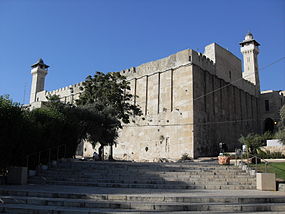 Our thrice daily prayer ritual reflects the contributions of each of our three forefathers. Avraham gave us the custom of Shachrit due to his early morning service reported in the Torah. Yaakov gave us Ma’ariv due to his intense nighttime experience on Har HaMoriah dreaming of ladders stretching up to heaven. We have Yitzchak to thank for Mincha. He is described as “conversing in the field” before the sun set when his besheret Rivka gets a glimpse of him for the first time. Likely this 30-something young man was praying hard for a wife. It’s no wonder that we too are “in the field” when we daven Mincha, either in the agricultural sense toiling the ground by the “sweat of our brow” or in whatever “field” we are engaged.
 God satisfies the desire of those with “chai ratzon,” in other words, those who have a will that is alive. So much of our day is often spent in repetitive tasks and drudgery. We take the same way to work every day, eat the same lunch, see the same faces. Our fire is slowly extinguished by the repetition of the “daily grind” and that ennui can soon turn into hopelessness. The idea of this line of the Ashrei is that YOU must take responsibility for keeping your will alive. Only you can change things around. Take a different way to work, get together with old friends, rediscover activities you enjoy, get physical rather than passive in front of a TV screen or a Facebook feed. Being truly alive requires more than just food, water and an occasional jaunt on a treadmill.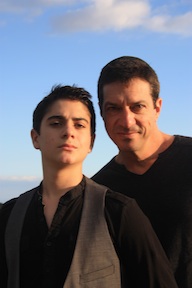
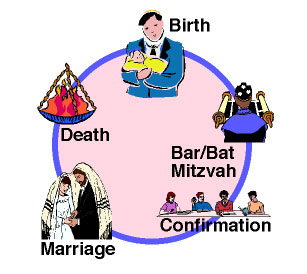 Everybody knows about the famous ones: bris, baby naming, bar/bat mitzvah, marriage and funerals. This month’s column is a segue from last month’s report on the miraculous nature of the bris and is dedicated to certain overlooked milestones that are equally a part of life. All cultures celebrate rites of passage. In the US we have graduations, sweet 16’s, getting a driver’s license, and the holy grail, reaching drinking age. As a parent I’ve noticed that once you have kids there are a few other significant transitions that are rarely discussed.
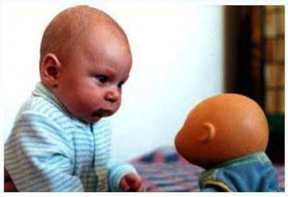 “reproductively irrelevant.” I always envisioned having four kids. Four is a nice, round number, I grew up in a family with four boys and I felt like four meant you were a real parent. Also, one of our favorite rebbetzins used to lecture us on the importance of Jews having large families to undo the damage of Hitler’s taking 1.5 Million of our kinderlach. I love the sweet adventure and mystery of pregnancy and birth. Of course that’s easy for me to say. I tried to participate in everything, from birth coaching to feeding and the changing diapers. I even got to dispense the milk my wife would laboriously pump.
 The next lifecycle event came on the heels of our last child becoming a Bat Mitzvah. Sarah turning 12 means that Max is a senior in high school. Yes, my friends, the empty nest phase is approaching. We are now in the midst of SAT’s, college applications and researching yeshivot in Israel. Last month he went on his senior trip in which the class goes to Israel to see firsthand the top fifteen academies that are recommended for their gap year of study. This is all very exciting for Max. But it’s a bit heartbreaking for me. Our official annual vacation this last January was our last as a whole family, at least for the foreseeable future. Next year he won’t be with us for Pesach. Or High Holidays or Chanukah for that matter. We won’t enjoy his brief appearance at dinner every night. And Jesse, who is only a year-and-a-half younger soon will be following in his footsteps. I’m getting weepy writing this. I know I should be stoic and matter of fact. But I will leave that for my wife, who wears the pants in the family. (Actually I wear the pants, but she tells me which pair.)
 What did the moel bring to the bris?
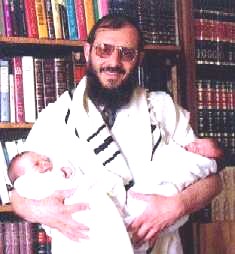 Two days later came the fancy bris of the month. All of the neighborhood big shots were assembled and it was anyone’s guess which bearded sage would be graced with the highest honor of sandek, the person who holds the baby in his lap during the ceremony. It was the father’s fourth child but he was as touched as if it were his first. His beautiful wife sobbed as she looked on. Amidst the pomp and circumstance of this first class affair there was still a simple presence of the Shechina and sure enough I found myself getting misty eyed once again. I was still wearing my tallis and tefillin from Shachrit and even though I had prayed in rote fashion, the power of the words I had already uttered somehow landed in my atria at the moment of the incision. One lesson learned: most attendees come for the mitzvah and not the meal. The ample delicacies were artfully displayed in stations across the vaulted lobby of the Museum of Tolerance and yet about 10% was eaten by the time the room cleared out.
 There is special significance in the fact that we are commanded to carry out this holy procedure on the eighth day. Kabbalah teaches that seven is the number associated with the intersection of the human sphere and the divine. That is why our weekly communion with our Creator and Redeemer, the Sabbath, is every seventh day. Eight is one step beyond, entirely metaphysical, the realm of the supernatural. It is interesting that eight is simply the vertical representation of the universal symbol for infinity. Eight is also the number associated with Chanukah where we celebrate the miraculous victory of the Maccabees and the length of time that the single cruse of oil burned. Some say that the miracle of Chanukah is the fact that we bothered to try to light the menorah or fight the Syrian-Greeks in the first place. After all, isn’t it wiser to surrender when all the chips are down, when defeat is inevitable? NO, says Jewish tradition. That is precisely when we must remember that we are a supernatural people that defies all laws of conventional sociology and, with God’s help, we are invincible.
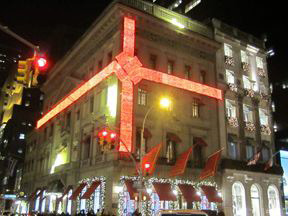 December is a time for new possibilities. Thanks to “holiday spirit” the world becomes a kinder, more colorful place. I just returned from Manhattan where the midtown buildings were transformed into magnificently wrapped presents. Even the cops were friendly. December means that our fiscal year is ending and we ponder what we might do differently when January comes around. Inclement weather demands that we spend less time outdoors, more time with inside activities that make us more internal, intellectual, introspective. The Torah portions of the season deal with dreamers; between Jacob, Joseph, the butcher, baker and Pharaoh we have eight dreams to cross-reference and inspire our own musings. Finally, Chanukah calls on us to fill the darkest, shortest days of the year with light and we are challenged to unveil our own unique light unto the world.
 method of inspiring transformation. Like me, he performs and teaches for a living. But I now see that there is a tremendous difference in our approach, thanks to “The Possible You,” a powerful seminar that he has founded. He takes responsibility for every one of the attendees in his Jerusalem-based twenty-hour program. He will work with anyone who is not getting it, and relentlessly pursue those who bail before “graduation.” With an intensely paced delivery of profound insights coupled with music, visual aids and group sharing, a crucial set of life tools are communicated to the full spectrum of learners in all modalities. The results are nothing short of astounding and my brother’s reputation is growing exponentially. He has cobbled The Possible You from the wisdom of Kabbalah, Mussar and Tanach. It’s tailor-made for the Jewish neshama. Now with several thousand graduates, myself included, I see The Possible You changing the world.
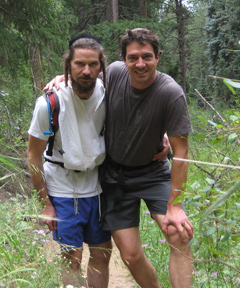 Over twenty hours, strangers become allies and loving friends, taking a stand for each other’s success in life. They open the door to estranged family members and experience real healing for wounds gathered over life’s journey. It sounds too good to be true, right? I wouldn’t have believed it if I didn’t see it with my own eyes.
 My wife buys the smallest packages of food in order to conserve space in our three-shelf pantry. When I open it on any given morning and find one of those 10oz. boxes of Cheerios I cringe and dream of a time when we can shop at Costco. Furthermore, I insist on having a plethora of cereal options so that I can mix and match my breakfast. She retaliates by buying the mini jars of peanut butter. I get the same grief when it comes to my closet full of clothes. She argues that I have more than she does and calls me a pack rat. I respond that I like lots of choices and see no reason to throw my old favorites away, as long as they still fit. So too with my CD collection, the gear in my music studio, my library. Am I too attached to material things? Yes. But I prefer to give my obsession another name.
 correctness. We live at a time when conscientious Americans are trying to reduce our carbon footprints, bringing canvas bags to the supermarket, driving hybrids and recycling. I’m not suggesting that we abandon these astute practices, God forbid! I am suggesting that we distinguish between minimizing our consumption and maximizing our joy.
 “magnets”; if we prove that we know how to do the right thing in any situation, clearly God can trust us with abundance. God aches to give us more, but we have to CHOOSE the relationship, we have to ASK for what we want and we have to BUILD ourselves into individuals who can handle abundance.
 and should use our Jewish institutions to enhance our connection rather than provide a glass ceiling to our growth. My friend David Suissa comments that in religious life we decide, “that’s not what I do” and then defend that stance religiously! We argue: why try a mitzvah one time if it makes us a “hypocrite” for not sticking with it? As Jews, our access to shefa is closely aligned with the mitzvot that we take on. Take a chance! Be a hypocrite once in a while. Suissa quotes Rabbi Shlomo Schwartz as saying “God counts only the mitzvahs you do, not the ones you don’t.”